Beyond the White Cube: How Renegade Exhibition Spaces Are Democratizing the Art of Storytelling
Photo: Intakhab, CC BY-SA 4.0, via Wikimedia Commons
The gallery occupies a former nail salon in a strip mall on the eastern edge of Houston, wedged between a tax preparation service and a Vietnamese grocery. There is no grand entrance, no climate-controlled atrium, no wall text written in the measured cadences of institutional authority. What there is: a rotating exhibition of photographs documenting the daily lives of undocumented workers in the Gulf Coast fishing industry, printed large and hung without apology, accompanied by hand-lettered captions written by the subjects themselves.
This is Espacio Común, an artist-led exhibition space founded four years ago by photographer and community organizer Lucía Vargas. It is not a museum. It is not a nonprofit gallery in the conventional sense. It is, as Vargas describes it, "a room where people who are usually looked at get to decide how they are seen."
Espacio Común is one of hundreds of independent, community-driven cultural spaces that have emerged across the United States over the past decade, operating outside the established museum system and, in many cases, explicitly in response to it. From pop-up installations in church basements in Detroit to permanent artist collectives housed in former industrial buildings in Philadelphia, these alternative venues are rewriting the rules of cultural curation — and in doing so, raising urgent questions about who has historically held the authority to define American heritage.
The Gatekeeping Problem
American museums have made significant public commitments to diversity and inclusion in recent years. Acquisitions policies have shifted, curatorial staff has grown more representative in some institutions, and community advisory programs have proliferated. Yet critics argue that structural change within major institutions has lagged considerably behind the rhetoric.
A 2022 study by the Mellon Foundation found that white curators still represent the majority of curatorial leadership at American art museums, and that collections at even the most prominent institutions continue to reflect historical patterns of acquisition that privileged European and Euro-American work. For communities whose histories and artistic traditions fall outside those patterns, the practical experience of engaging with mainstream museums often remains one of tokenism, mistranslation, or outright exclusion.
"The problem is not just who gets to show work inside the museum," said Marcus Webb, a curator and cultural worker who co-directs the Southside Cultural Collective in Chicago. "The problem is who gets to decide what counts as art, what counts as history, and whose story is worth preserving. Those decisions happen before the doors open. Alternative spaces are a response to that whole system, not just its surface."
Spaces Built on Different Terms
The Southside Cultural Collective operates out of a former auto repair garage in the Woodlawn neighborhood, a community that has experienced decades of disinvestment and is now facing the pressures of gentrification accelerated by Chicago's Olympic infrastructure development. The collective hosts rotating exhibitions, public conversations, oral history workshops, and a small permanent archive of neighborhood documentation — all organized by and for residents.
What distinguishes the collective from a conventional gallery is not merely its location or its aesthetics. It is the decision-making structure. Every exhibition is developed through a community consultation process in which neighborhood residents are not just informants but co-curators. Webb describes this as "curatorial accountability" — a commitment to ensuring that the interpretive authority over community stories remains with the community itself.
"We do not have a board of trustees who inherited wealth deciding what Black history on the South Side looks like," he said. "We have grandmothers and teenagers and block club presidents making those decisions together. That changes everything about what ends up on the wall."
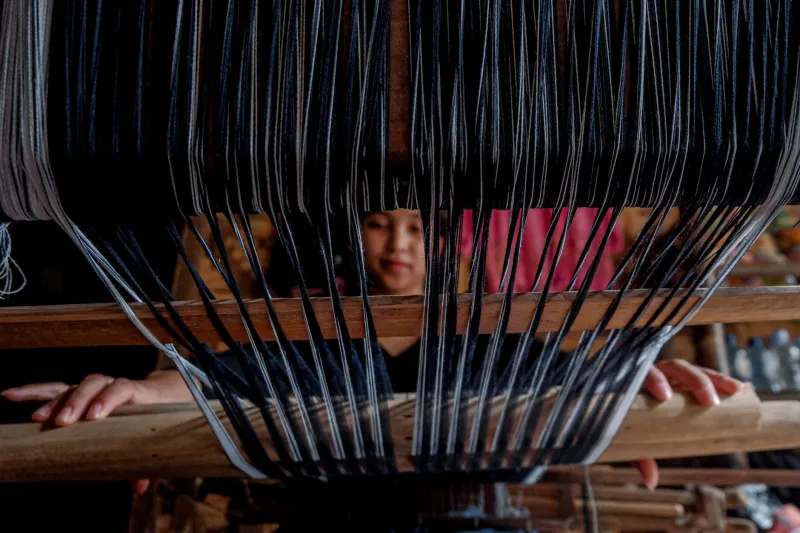
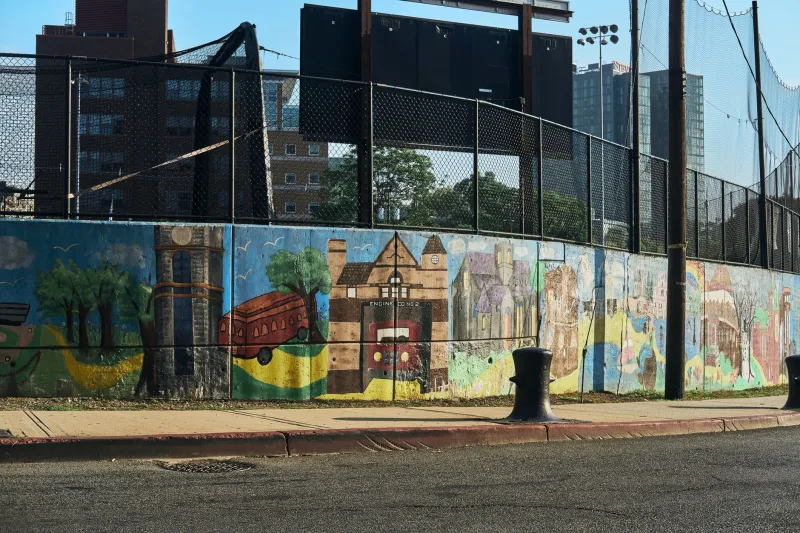
In Minneapolis, a collective called The Weaving Room has taken a different architectural approach, using a series of interconnected storefronts in a predominantly Somali-American neighborhood to create a distributed exhibition environment that extends into the street itself. Window installations, exterior murals, and audio elements accessible via posted QR codes mean that the exhibition is not contained within any single space — it inhabits the neighborhood as the neighborhood inhabits it.
"We wanted the work to be impossible to walk past without engaging," said co-founder Hodan Jama. "In a traditional museum, you make a decision to go in. Here, the work comes to you. It is part of the everyday environment, which is where culture actually lives."
The Resource Question
Operating outside institutional frameworks brings considerable freedom. It also brings precarity. Most community-led exhibition spaces function on minimal budgets, cobbled together from small grants, individual donations, in-kind support, and the unpaid or underpaid labor of their founders. The sustainability challenge is real and, for many spaces, existential.
"We are doing the work that major institutions get millions of dollars to do, and we are doing it on $40,000 a year if we are lucky," said Vargas of Espacio Común. "That is not a complaint — it is a structural observation. The funding ecosystem in this country is built to sustain large institutions, not to support the communities those institutions are supposed to serve."
Some philanthropic organizations have begun directing more resources toward community-led cultural infrastructure, recognizing that these spaces often reach audiences and document histories that no mainstream institution would or could. The Ford Foundation, the Kresge Foundation, and a number of regional community foundations have expanded grant programs specifically targeting artist-led and community-controlled cultural venues. But advocates argue that the scale of investment remains insufficient relative to the scale of need.
A New Definition of Cultural Authority
What these spaces collectively represent is more than an alternative exhibition circuit. They constitute an argument — delivered in installation and conversation and archive — about what cultural authority means and where it should reside.
For too long, the dominant model has positioned communities as subjects of cultural documentation rather than its agents. Heritage has been something done to communities by institutions, rather than something communities do for themselves. The renegade exhibition spaces emerging across the country are rejecting that model not through confrontation with established institutions, but through the quieter and ultimately more transformative act of building something new.
"We are not waiting for the museum to tell our story correctly," said Webb. "We are telling it ourselves, in our own building, on our own terms. That is what cultural sovereignty looks like at the neighborhood level."
In a strip mall in Houston, a former nail salon is doing exactly that — one photograph, one caption, one visitor at a time.