From Loom to Livelihood: How Artisans Are Turning Ancestral Crafts Into Economic Power
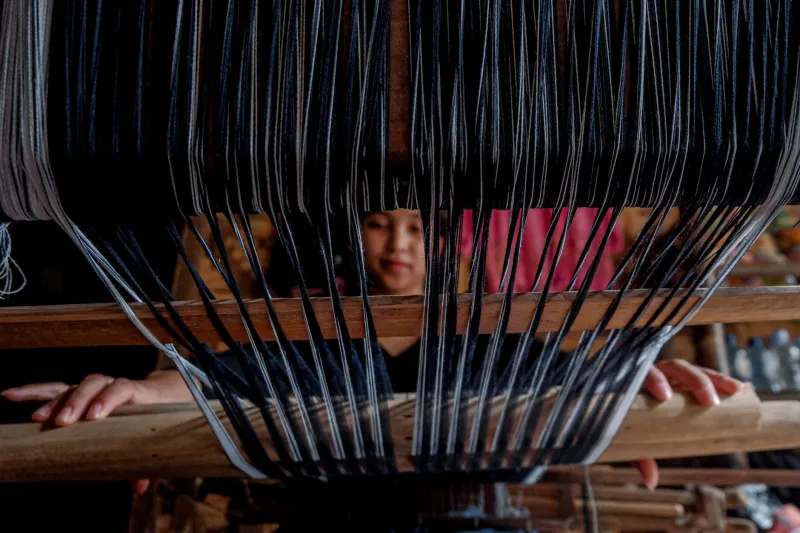
In a sunlit studio on the east side of Detroit, Amara Osei threads a hand loom with the same deliberate care her grandmother practiced in Ghana decades ago. The fabric she produces — a contemporary adaptation of kente weave — sells through her online shop, at regional craft fairs, and through a cooperative she co-founded with seven other textile artists. Osei is not simply preserving a tradition. She is, by every meaningful measure, running a business.
"People used to ask me why I didn't pursue something more practical," she says, pausing between rows. "Now those same people are asking me how to get started."
Osei's story is far from singular. Across the country, a widening network of craftspeople is demonstrating that heritage skills — long relegated to the margins of the modern economy — can serve as credible, sustainable pathways to financial independence. What was once called the "craft revival" has matured into something more consequential: an emerging sector with cooperative models, community investment structures, and explicit ties to economic justice.
A Different Kind of Supply Chain
The conventional understanding of economic mobility in America has centered on formal education, corporate employment, or technology entrepreneurship. But for many communities — particularly those whose histories include displacement, exclusion from mainstream labor markets, or the deliberate suppression of cultural knowledge — these pathways have not always been accessible or culturally resonant.
Traditional crafts offer an alternative framework. The materials, the techniques, and the knowledge are frequently already present within communities. What has changed is the infrastructure supporting artisans who wish to professionalize.
In Albuquerque, New Mexico, the Indian Pueblo Cultural Center has expanded its support for Native artisans through mentorship programs and market access initiatives that connect makers with buyers who value authenticity and provenance. The center's leadership has been deliberate in framing this work not as charity but as economic development rooted in cultural sovereignty.
Similarly, in Appalachian Kentucky, organizations like the Appalachian Artisan Center in Hindman have long recognized that woodworking, basket weaving, and quilting traditions carry commercial potential that, when properly supported, can provide stable income in regions where conventional employment has contracted significantly.
Cooperative Models and Collective Power
One of the most significant structural shifts in the craft revival economy is the rise of worker-owned cooperatives and collective sales platforms. Rather than individual artisans competing for limited market attention, cooperative models allow makers to pool resources, share overhead costs, and present a unified brand identity to buyers.
In Chicago's Pilsen neighborhood, a collective of Latinx ceramic artists operates a shared studio space and sells through a jointly managed storefront. Members rotate administrative responsibilities and share revenue from wholesale orders. The arrangement, they explain, mirrors communal economic practices that predate the cooperative movement by generations.
"In many of our families, you didn't succeed alone," says one member of the collective, who learned her craft from her mother in Oaxaca before relocating to Chicago in her twenties. "The cooperative just gives that value a legal structure."
This collective orientation also addresses one of the persistent vulnerabilities of the independent artisan economy: inconsistent income. By pooling orders, members can accept larger commissions, negotiate better terms with suppliers, and cover one another during slow seasons.
Digital Platforms and the New Marketplace
The expansion of e-commerce platforms has undeniably altered the economics of traditional craft. Marketplaces such as Etsy and, increasingly, Instagram-based direct sales have allowed artisans to reach buyers across the country and internationally without the cost burden of physical retail.
However, this access comes with its own complications. Algorithmic visibility favors volume and speed — conditions that are often antithetical to the slow, labor-intensive nature of handmade work. Many artisans report frustration with platform dynamics that reward mass production aesthetics while making it difficult to communicate the genuine value of handcrafted heritage goods.
Some communities have responded by developing their own digital infrastructure. Several Indigenous artist collectives, for instance, have launched dedicated online platforms that contextualize the cultural significance of each piece alongside its price, creating a buying experience that educates consumers rather than simply transacting with them.
Heritage as Value, Not Nostalgia
Perhaps the most important conceptual shift within this movement is the insistence that traditional craft not be framed through the lens of nostalgia. Artisans and advocates alike are increasingly vocal about distinguishing between preservation — which can carry a museum-like passivity — and living practice, which evolves, adapts, and responds to contemporary conditions.
In Philadelphia, a Somali-American weaver who produces textiles inspired by East African traditions has incorporated synthetic dyes and modern geometric interpretations alongside traditional motifs. She sells to interior designers and galleries, and her work has been featured in design publications that rarely cover heritage craft. To her, the work is neither purely traditional nor purely contemporary — it is a conversation between inherited knowledge and present circumstance.
"My grandmother would recognize what I'm doing," she explains. "She might not recognize the customer, but she would recognize the work."
This posture — honoring lineage while refusing stagnation — is increasingly recognized as both culturally honest and commercially viable. Buyers, particularly younger consumers with demonstrated interest in ethical sourcing and cultural authenticity, are often drawn precisely to the layered meaning that heritage craft carries.
Building the Infrastructure for Sustained Growth
For the craft revival economy to fulfill its potential as a genuine vehicle for economic justice, advocates argue that systemic support must accompany individual entrepreneurship. This includes access to small business loans calibrated to the irregular income patterns of craft production, zoning policies that accommodate shared studio spaces in residential neighborhoods, and educational programs that integrate heritage skills into vocational training pipelines.
Several municipalities have begun moving in this direction. Local arts councils in cities including Minneapolis, Los Angeles, and Baltimore have created grant programs specifically targeting heritage craft enterprises, recognizing that these businesses generate cultural value alongside economic activity.
The challenge, as many practitioners note, is ensuring that such support reaches the communities most in need rather than being absorbed by already-established makers with greater access to institutional networks.
Amara Osei, back at her loom in Detroit, puts it plainly. "The skills were always here. The knowledge was always here. What we needed was for the world to take it seriously as work — real work, dignified work."
In a growing number of American communities, that recognition is arriving. And with it, a more expansive understanding of what economic possibility can look like.