Words Without Borders: One City's Effort to Preserve What Language Leaves Behind
There is a Somali word, gacmo, that refers to the act of extending one's hands in welcome — not merely as a gesture, but as an embodied expression of hospitality that implies obligation, kinship, and moral reciprocity. Its closest English approximation, "welcoming hands," captures the physical motion but loses the ethical weight. The word is not simply vocabulary. It is a compressed cultural philosophy.
For Somali-Americans in Minneapolis — home to one of the largest Somali diaspora communities in the world — words like gacmo exist at the center of a quiet but consequential struggle: how to transmit cultural meaning across a linguistic boundary that does not merely separate languages but separates entire ways of understanding human relationships.
This struggle is not unique to any single community. From Arabic-speaking families in Dearborn, Michigan, to Hmong households in the Twin Cities, to Vietnamese communities in Houston, immigrant families across the United States are grappling with the same fundamental challenge: that the move into English as a primary language carries with it a form of cultural erosion that is invisible in official statistics but deeply felt in daily life.
What Is Lost in Translation
Linguists have long recognized that languages do not simply encode the same reality in different sounds. They organize reality differently — carving up experience, emotion, and social obligation in ways that reflect the particular histories and values of the communities that developed them. When a language is lost or diminished, the perceptual and conceptual frameworks it carried do not automatically transfer to the replacement language. They must be consciously preserved, or they dissolve.
The consequences are practical as well as philosophical. Community health workers in Minneapolis have noted that mental health concepts rooted in Somali cultural frameworks — including specific forms of communal grief, spiritual distress, and social shame — are frequently misdiagnosed or misunderstood when filtered through English-language clinical terminology. The translation problem, in these cases, is not a matter of linguistic inconvenience. It has direct implications for the quality of care that community members receive.
Similar issues arise in legal contexts, where interpreters working between Hmong and English have documented the difficulty of conveying concepts of familial obligation and communal decision-making that have no precise legal equivalent in American jurisprudence. A word that implies collective responsibility can be flattened into individual liability, with serious consequences for the people involved.
Minneapolis as a Laboratory
In response to these challenges, Minneapolis has become the site of an unusually ambitious set of initiatives aimed at documenting and sustaining linguistic heritage within its diverse immigrant communities. The effort is not centralized within a single institution but rather distributed across a network of libraries, community centers, universities, and neighborhood organizations — a structure that reflects the grassroots character of the problem it is addressing.
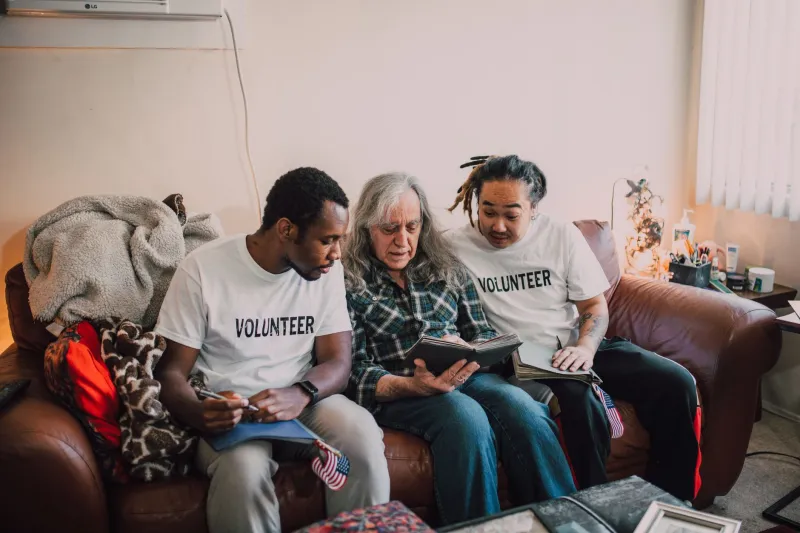
At the Minneapolis Central Library, a partnership with the University of Minnesota's Department of Linguistics has produced an ongoing oral history archive focused specifically on untranslatable terms from the city's major immigrant language communities. Volunteer speakers — ranging from elderly first-generation immigrants to bilingual young adults — are recorded discussing not just the definitions of specific words but the contexts, stories, and cultural frameworks that give those words their meaning.
The archive currently holds recordings in more than thirty languages, with Somali, Hmong, Oromo, Karen, and Spanish representing the largest collections. Archivists have been deliberate in soliciting contributions from speakers across generations, recognizing that the same word may carry subtly different meanings and associations depending on when and where a speaker grew up.
Youth as Documentarians
Perhaps the most innovative aspect of Minneapolis's linguistic preservation effort is its investment in young heritage speakers as active participants in the documentation process — not as passive recipients of cultural transmission but as researchers, interviewers, and curators of their own communities' knowledge.
Through a program developed in partnership with several Minneapolis public high schools, students whose families speak languages other than English at home are trained in basic ethnographic interview techniques and provided with recording equipment. Their assignment is to interview older family and community members about words and expressions that the students themselves may not fully understand — creating a structured occasion for intergenerational conversation that might not otherwise occur.
The results have been striking in ways that extend beyond the linguistic archive they produce. Teachers and program coordinators report that students who participate in the project demonstrate increased engagement with their heritage languages and greater confidence in discussing their cultural backgrounds in academic settings. The act of being positioned as a researcher — rather than as a student who lacks English proficiency — appears to shift the terms on which young people relate to their linguistic inheritance.
"I knew my grandmother had a whole world inside her that I couldn't fully reach," says one seventeen-year-old participant whose family emigrated from Eritrea. "This gave me a reason to try harder to reach it, and a way to share what I found."
The Limits of Documentation
For all the value of archival and documentation work, many linguists and community advocates are candid about its limitations. A recorded explanation of an untranslatable word is not the same as a living linguistic community in which that word is used naturally, acquired by children, and embedded in daily social practice. Documentation preserves; it does not necessarily revitalize.
The distinction matters because the communities most engaged in linguistic preservation work are also frequently those facing the greatest pressure toward English-only assimilation — through school environments, employment requirements, and social dynamics that implicitly or explicitly devalue heritage language use.
Advocates in Minneapolis have therefore paired documentation efforts with advocacy for structural changes in educational settings. Several community organizations have pushed for expanded heritage language instruction in public schools, arguing that the cognitive and cultural benefits of bilingualism — well-documented in the research literature — are being sacrificed to a monolingual educational norm that serves neither students nor the broader community well.
The Minneapolis Public Schools district has responded with cautious expansion of dual-language programs in Somali and Spanish, though advocates note that funding constraints and staff availability continue to limit access.
Meaning as Inheritance
There is a Hmong concept, kev cai, that encompasses the entirety of cultural practice, tradition, and moral order — a word that functions not merely as a description but as an invocation of everything a community holds sacred about its way of life. Elders in Minneapolis's Hmong community use the word when they speak of what they most fear losing and what they most urgently wish to pass on.
The linguistic preservation initiatives taking shape in Minneapolis are, at their deepest level, attempts to honor that urgency — to create conditions in which the full inheritance of immigrant communities, including the parts that resist easy translation, can be carried forward rather than quietly surrendered at the border of a new language.
The work is painstaking, underfunded, and in many ways incomplete. But it proceeds from a recognition that is both simple and profound: that a community's words are not merely its means of communication. They are the architecture of its inner life, and they deserve to be treated with the same care and seriousness as any other form of cultural heritage.