Living History: The Forgotten Neighborhoods Quietly Keeping American Culture Alive
There is a particular kind of richness that does not appear in travel brochures. It exists instead in the hand-painted sign above a family-owned tortillería that has operated for four decades, in the smell of Cuban bread baking before dawn, in the sound of a corrido drifting through an open window on a summer afternoon. Across the United States, entire neighborhoods carry this richness — communities where culture is not curated for outside consumption but lived, daily and with great intention.
These are America's overlooked cultural districts. And they deserve far more than a passing glance.
Boyle Heights: A Mural Is Worth a Thousand Policies
Nestled just east of downtown Los Angeles, Boyle Heights has long served as one of the most culturally layered communities in the American West. Historically home to successive waves of Japanese, Jewish, and Mexican immigrants, the neighborhood today is predominantly Latino — and its walls tell that story with remarkable eloquence.
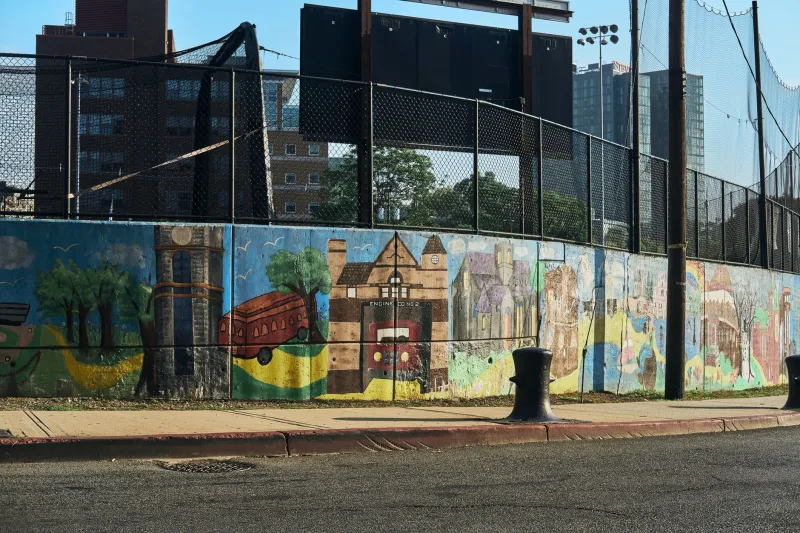
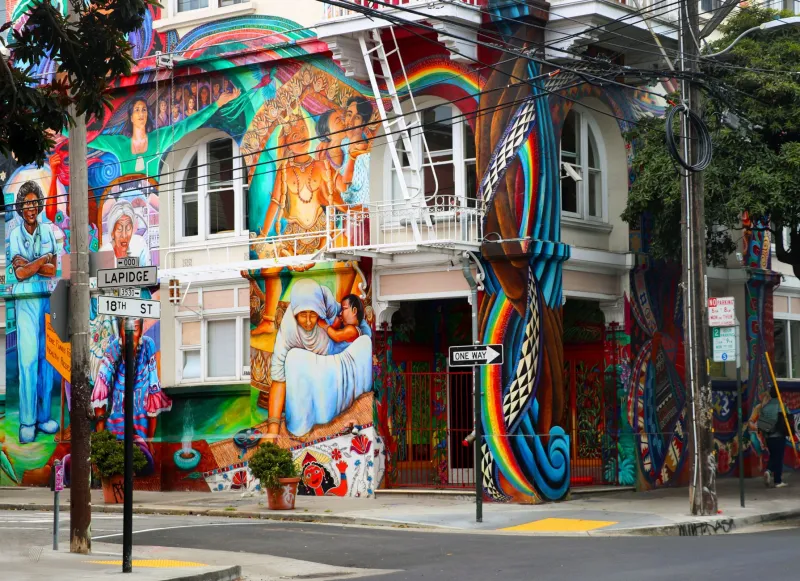
Street murals in Boyle Heights are not decorative afterthoughts. They are acts of testimony. Works by artists affiliated with the Royal Chicano Air Force tradition, as well as newer generations of muralists trained through local nonprofit programs, depict everything from Aztec cosmology to portraits of neighborhood elders lost to COVID-19. Organizations such as Self Help Graphics & Art, founded in 1970, have spent more than five decades providing studio space, printmaking workshops, and gallery exhibitions rooted in Chicanx artistic traditions.
Yet Boyle Heights is also ground zero for one of Los Angeles's most contentious gentrification battles. As property values in adjacent neighborhoods have soared, developers have cast increasingly eager eyes toward the community's relatively affordable real estate. Longtime residents and cultural organizations have responded with a coordinated resistance — hosting public forums, commissioning counter-narrative murals, and partnering with legal advocates to challenge displacement practices.
"When a family leaves, they take their altar, their recipes, their stories," said one community organizer during a 2023 public hearing on zoning reform. "You cannot put that back once it's gone."
Ybor City: Cigar Smoke and Collective Memory
In Tampa, Florida, the neighborhood of Ybor City occupies a singular place in American labor and immigrant history. Founded in the 1880s as a hub for the cigar manufacturing industry, it drew thousands of Cuban, Spanish, and Italian workers whose mutual aid societies, social clubs, and cultural institutions created a remarkably cohesive community life.
Today, the physical remnants of that era — red-brick factories, wrought-iron balconies, the Columbia Restaurant (which has operated continuously since 1905) — coexist uneasily with a nightlife economy that has gradually reshaped the district's character. Nevertheless, dedicated preservationists and heritage organizations continue to ensure that Ybor City's deeper history remains accessible and honored.
The Ybor City Museum State Park, operated in partnership with local historical societies, maintains archives, conducts oral history projects, and offers programming that connects contemporary Tampa residents — including many who are descendants of the original immigrant communities — with their ancestral past. Periodic festivals celebrating Cuban and Spanish heritage draw thousands of participants and serve as vital occasions for intergenerational cultural transmission.
The challenge, as in Boyle Heights, is economic. As Tampa's broader real estate market has intensified, Ybor City has attracted significant commercial investment that does not always align with preservation priorities. Community advocates have called for stronger historic designation protections and more inclusive planning processes that center the voices of heritage stakeholders.
Little Havana to Little Saigon: A National Pattern
The dynamics at play in Boyle Heights and Ybor City are not anomalies — they reflect a national pattern. From Little Havana in Miami, where Calle Ocho remains a vibrant corridor of Cuban cultural life, to Little Saigon in Orange County, California, where Vietnamese-owned businesses and cultural centers anchor one of the largest Vietnamese diaspora communities outside Southeast Asia, immigrant neighborhoods across the United States are simultaneously thriving and vulnerable.
In Philadelphia's Chinatown, residents have organized for decades against infrastructure projects — including a proposed stadium development — that would fragment their community's geographic coherence. In Detroit's Mexican Town, community development organizations are working to leverage cultural heritage as an economic asset without surrendering control to outside investors.
What unites these struggles is a shared conviction: that cultural districts are not simply pleasant amenities to be enjoyed by visitors, but essential infrastructure for the communities that created them.
Grassroots Institutions as Cultural Anchors
Perhaps the most durable defenders of these neighborhoods are the grassroots institutions that operate within them — the community centers, cultural nonprofits, heritage archives, and artist collectives that provide continuity across generations.
These organizations often operate on modest budgets and rely heavily on volunteer labor and small-dollar donations. Yet their impact is disproportionate to their resources. They offer language classes, traditional arts instruction, oral history documentation, and youth programming that connects younger generations to practices and knowledge that might otherwise be lost.
For those who wish to support this work, the most direct path is engagement: attending community events, patronizing neighborhood businesses, donating to local cultural nonprofits, and advocating for land use policies that prioritize cultural preservation alongside economic development.
The Stakes of Authenticity
Authenticity, in the context of cultural districts, is not a fixed or romantic concept. These neighborhoods have always been dynamic — shaped by migration, economic shifts, and the creative agency of their residents. What preservationists seek to protect is not a frozen past but an ongoing capacity for communities to define their own cultural lives on their own terms.
When that capacity is eroded by displacement, when the families and institutions that animate a neighborhood are scattered by rising rents and speculative development, something genuinely irreplaceable is lost. The murals may remain on the walls for a time, but without the community that produced them, they become artifacts rather than living expressions.
America's overlooked cultural districts remind us that heritage is not only found in museums or designated historic sites. It lives in the everyday practices of communities that have chosen, often against considerable odds, to maintain their connection to who they are and where they come from. Supporting that choice — through policy, philanthropy, and personal engagement — is among the most meaningful contributions any of us can make to the cultural life of this nation.