Scrolling Through Tradition: When Gen Z Becomes the Unlikely Steward of America's Cultural Heritage
The assumption has persisted for decades in cultural preservation circles: that young people are the primary threat to traditional arts. They are distracted, the argument goes, by screens and trends and the relentless novelty of digital life. They lack the patience for the slow, deliberate apprenticeship that mastery of a heritage craft demands.
That assumption deserves a serious reexamination.
Across the United States, a growing cohort of young Americans — many of them in their teens and twenties — are not abandoning the cultural practices of their communities. They are amplifying them, translating them into the visual and sonic language of digital platforms, and in doing so, reaching audiences that traditional institutions could never have accessed.
This is not a simple story of preservation versus innovation. It is something more complicated, more interesting, and ultimately more hopeful.
The Algorithm Meets the Ancestral
Consider what has happened with Indigenous beadwork. For generations, the intricate beading traditions of nations including the Lakota, Ojibwe, and Cherokee were transmitted through direct mentorship — grandmothers teaching granddaughters in kitchens and community halls, knowledge passing hand to hand through demonstration and repetition.
That transmission continues. But it has acquired a new channel. Indigenous beadwork artists on TikTok and Instagram now document their process in real time — selecting seed beads, mapping geometric patterns, stitching with quiet precision — while hundreds of thousands of viewers watch. Some of those viewers are members of the same nations, reconnecting with practices that colonization and assimilation pressures had disrupted in their own family lines. Others are non-Indigenous admirers learning, perhaps for the first time, the depth of skill and cultural meaning embedded in what they might once have dismissed as "craft."
The reach is extraordinary. A single video by a Lakota beadworker explaining the significance of particular color combinations in traditional regalia may receive more views in a week than a museum exhibition receives visitors in a year.
Classical Forms Find New Audiences
The phenomenon extends well beyond Indigenous traditions. Young South Asian American musicians are performing classical ragas and Carnatic compositions on YouTube channels that have attracted subscriber bases in the hundreds of thousands. African American classical musicians — still significantly underrepresented in major orchestras — are using social media to both showcase their artistry and challenge the gatekeeping structures of the classical music world.
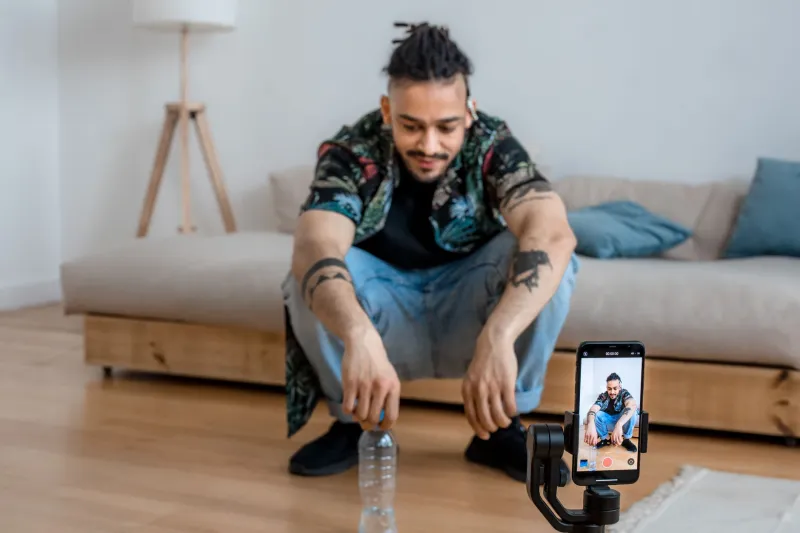
In the folk music sphere, young Appalachian artists are documenting dulcimer and banjo traditions that scholars have long feared were at risk of disappearing. Their videos, often filmed with nothing more than a smartphone and natural light, carry an intimacy and accessibility that formal concert recordings rarely achieve.
What is striking about many of these creators is that they are not simply performing traditional forms for passive consumption. They are contextualizing them — explaining historical origins, discussing the communities from which specific practices emerged, and inviting dialogue with their audiences. In this sense, they are functioning as educators and cultural ambassadors, not merely entertainers.
The Remix Question
Here is where the conversation becomes more nuanced, and where reasonable people within cultural communities hold genuinely different views.
Many Gen Z creators do not simply reproduce traditional forms — they remix them. A young Navajo artist might incorporate traditional textile patterns into streetwear designs. A Vietnamese American musician might layer ancestral đàn tranh melodies over contemporary electronic production. A Puerto Rican dancer might fuse bomba footwork with contemporary hip-hop choreography.
For some cultural elders and preservation advocates, this hybridization is cause for celebration. Culture has always evolved through contact and exchange, they argue, and the vitality of any living tradition depends on its capacity to absorb new influences without losing its essential character. A tradition that cannot speak to young people is a tradition in genuine peril — not from remix, but from irrelevance.
For others, the concern is more specific: that digital platforms, with their emphasis on brevity, visual spectacle, and algorithmic reward, inevitably flatten the complexity of traditional practices. A thirty-second TikTok clip of a sacred dance form cannot convey the years of training, the spiritual protocols, or the community context that give that form its deepest meaning. Worse, decontextualized fragments can be appropriated, commercialized, or misrepresented in ways that cause real harm to the communities of origin.
Both concerns are legitimate. And they are not mutually exclusive.
Digital Democratization and Its Discontents
Social media platforms have genuinely democratized access to cultural expression in ways that traditional institutions — museums, concert halls, academic programs — have often failed to do. A young artist from a rural reservation or an under-resourced urban community no longer needs institutional validation or geographic proximity to a cultural center to share their work with the world. The platforms provide infrastructure that was previously unavailable.
At the same time, those platforms are not neutral. They are designed by corporations whose interests are engagement and advertising revenue, not cultural preservation. The algorithmic logic that rewards virality does not necessarily reward depth. Communities that wish to use digital tools on their own terms must contend with platform structures that were not built with their priorities in mind.
There is also the question of intellectual property and cultural sovereignty. When traditional designs, songs, or practices go viral, who benefits economically? Who controls the narrative? These questions do not have easy answers, but they must be part of any honest assessment of digital heritage work.
A Generation Worth Trusting
This editorial does not pretend that the tensions described above are easily resolved. They are not. Cultural authenticity is a genuinely contested concept, and the relationship between tradition and innovation has always been a site of generational negotiation.
What we do wish to assert, with conviction, is that Gen Z's engagement with heritage arts deserves to be taken seriously — not condescended to, not romanticized, but genuinely engaged with as a complex and consequential cultural phenomenon.
These young people are not passive recipients of tradition. They are active interpreters, asking hard questions about what their inheritance means to them and how it can survive into a future that looks very different from the past. That is precisely the kind of engagement that living cultures require.
At Thiqar Arts & Heritage, we believe that supporting this generation means creating spaces — both digital and physical — where they can explore traditional practices with depth and rigor, learn from elders who hold irreplaceable knowledge, and develop the critical frameworks to navigate the genuine complexities of cultural expression in the digital age.
The scroll and the loom, it turns out, are not opposites. In the hands of a thoughtful young creator, they can be partners.