Inherited Memory: How Young Americans Are Building Digital Archives Their Families Never Had
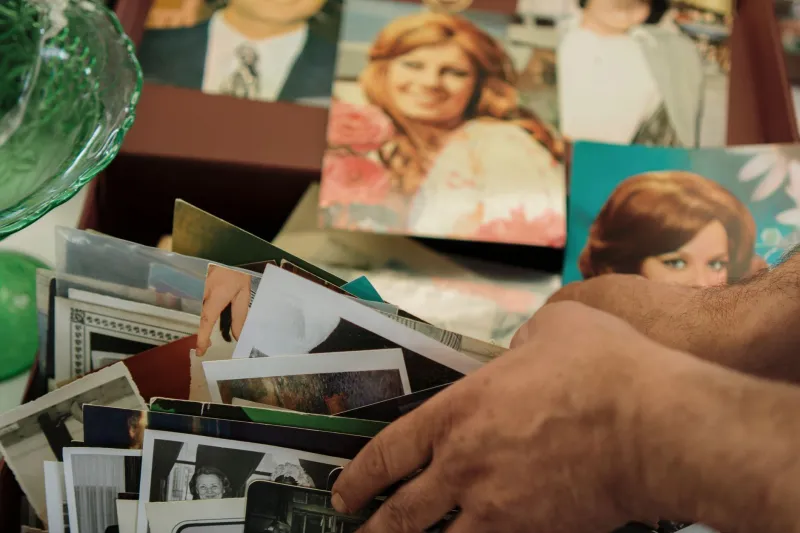
In a one-bedroom apartment in Houston, a 24-year-old college student has spent the better part of two years photographing her grandmother's handwritten recipe cards, recording hours of conversation about life in a small Vietnamese village before 1975, and uploading the results to a carefully organized digital folder she has shared with eleven members of her extended family. She has no formal training in archival science. She is working from instinct, urgency, and the growing awareness that her grandmother is the last person alive who holds certain knowledge.
Her project has no institutional affiliation, no grant funding, and no guarantee of permanence. It is, by any conventional measure, an informal undertaking. And it is also, by any honest measure, an act of cultural preservation that no library or historical society was positioned to perform.
She is not alone. Across the country, a generation that came of age with smartphones and social media is turning those tools toward a purpose that earlier generations of technologists did not anticipate: the systematic documentation of lives and traditions that mainstream heritage institutions have historically failed to prioritize.
The Institutional Gap
To understand why this movement has emerged, it is necessary to understand what it is responding to. The United States has an extensive network of archival and heritage institutions — the Library of Congress, the Smithsonian, state historical societies, university special collections. These institutions have done valuable work, and their contributions to American cultural memory are substantial.
They have also, as scholars and community advocates have documented at length, reflected the priorities and perspectives of those with the greatest access to institutional power. The histories most thoroughly preserved tend to be the histories of those who were already visible: the politically prominent, the economically prosperous, the culturally dominant. The everyday lives of immigrant families, Indigenous communities, working-class neighborhoods, and communities of color have been archived selectively, when at all.
This is not always a story of malicious intent. Resource constraints, geographic limitations, and the sheer difficulty of community outreach have all contributed to these gaps. But the effect, regardless of cause, is the same: vast portions of American cultural experience exist in no institutional record whatsoever. They live only in living people — and living people do not last forever.
Digital Tools as Democratic Infrastructure
What has changed in the past decade is the accessibility of the tools required to begin filling those gaps. A smartphone with a decent camera and a free cloud storage account is sufficient to create a photographic record that would have required significant institutional resources a generation ago. Voice memo applications can capture oral histories. Platforms designed for genealogical research have made it easier to connect personal family records to broader historical contexts.
For the young people driving this movement, these tools have lowered the barrier to participation in a practice that was previously restricted to those with professional credentials or institutional backing. The result is a distributed, informal archival infrastructure that is, in aggregate, documenting dimensions of American life that the formal system was never designed to capture.
Social media has added a dimension that traditional archiving cannot replicate: community. Young archivists working on family and neighborhood documentation frequently share their work across platforms, creating networks of people engaged in similar projects who can offer advice, share resources, and collectively build something larger than any individual effort could produce. What begins as a private project — scanning a grandmother's letters, filming a father's description of his journey to the United States — can become a node in a much broader web of community memory.
The Weight of Responsibility
The people doing this work are candid about the pressures it carries. There is a particular kind of urgency that attaches to documentation undertaken in the shadow of mortality — the awareness that a delay of months or years may mean the permanent loss of irreplaceable knowledge. Several young archivists have described beginning their projects in response to a family member's illness or death, the loss serving as a clarifying reminder of how much had not yet been recorded.
There is also the weight of representational responsibility. When a young person positions themselves as the keeper of a family's or community's story, they are making choices — about what to include, how to frame it, what context to provide — that will shape how that story is understood by future generations. This is not a neutral or technical task. It is an interpretive one, and the people doing it are often doing it without formal training in the ethical and methodological frameworks that professional archivists spend years developing.
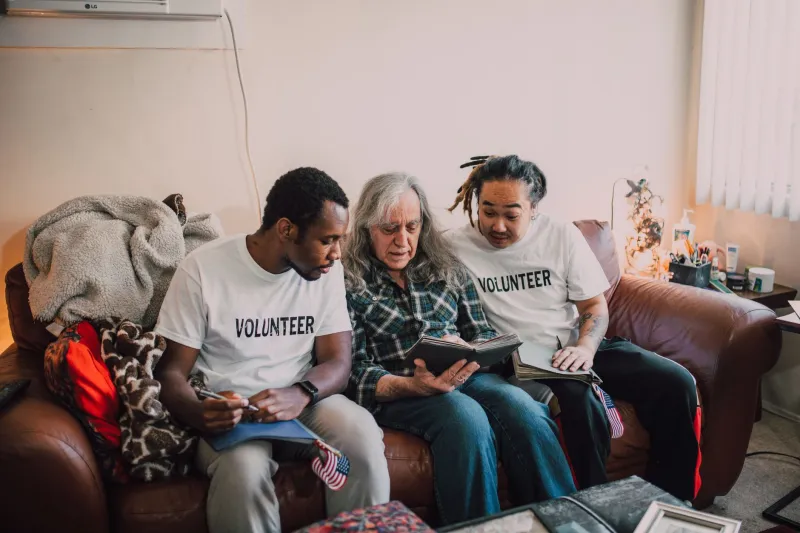
Many have responded to this challenge by seeking out that training informally — through online communities, through conversations with professional archivists who have been generous with their knowledge, and through the kind of learning that comes from making mistakes and correcting them. The result is a generation of community archivists who are, in many cases, developing sophisticated practices through self-directed study.
The Fragility Problem
Any honest account of this movement must grapple with its structural vulnerabilities. Digital preservation is not inherently more durable than physical preservation — it is differently precarious. Hard drives fail. Cloud storage services shut down or change their terms of service. Social media platforms have a history of disappearing content without warning or recourse.
The archives being built by young Americans in their apartments and on their phones are, in many cases, held together by the continued engagement of a single person. If that person loses interest, moves on, or dies, the archive may effectively cease to exist. This is a problem that the formal archival community has not yet developed adequate solutions for, and it is one that the informal archival community is only beginning to confront.
Some organizations have begun to bridge this gap — working with community archivists to migrate their collections into more stable institutional repositories while preserving community control over access and interpretation. These partnerships represent a promising direction, but they remain the exception rather than the rule.
Memory as a Form of Belonging
Underlying all of this work is something that transcends the practical question of preservation. For many of the young people engaged in it, the act of documenting their family's history is inseparable from the act of understanding their own place in the world. In a country where the dominant cultural narrative has frequently excluded or minimized their communities' contributions, building an archive is a way of asserting that those contributions were real, that the people who made them mattered, and that the record of American life is incomplete without them.
This is, ultimately, what distinguishes personal archiving from mere nostalgia. It is not simply a backward glance. It is an argument about the present — about whose experiences deserve to be remembered, whose voices deserve to be heard, and whose stories deserve a permanent place in the larger account of who we are as a nation.
The young Americans building these archives in their spare time, with tools designed for other purposes, are not waiting for institutions to make that argument on their behalf. They are making it themselves.