Selling the Sacred: The Uncomfortable Truth Behind the 'Authentic Craft' Label

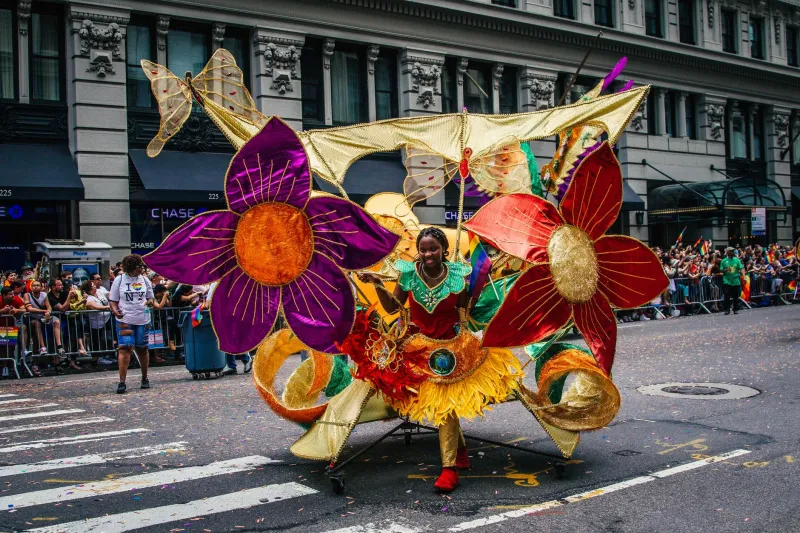
Photo by Photo by Yasin Onus on Unsplash on Unsplash
Walk through any weekend farmers' market in Portland, Austin, or Brooklyn, and you will find them: hand-thrown pottery with geometric motifs borrowed from Southwestern Indigenous traditions, woven textiles carrying the visual vocabulary of West African kente, embroidered goods whose patterns trace back to villages in Oaxaca or the Levant. The labels often read "artisan-made" or "ethically sourced." Sometimes they even say "inspired by ancient tradition." What they rarely say is who, precisely, benefits — and who does not.
The craft economy in the United States has grown substantially over the past decade. According to research from the Association for Creative Industries, the broader creative products market now exceeds $44 billion annually. Within that figure, heritage-inflected and culturally distinct handmade goods occupy an increasingly lucrative niche. Consumer appetite for objects that carry a sense of story, place, and human labor has never been stronger. But that appetite, however well-intentioned, has also created a marketplace where cultural meaning can be stripped away from its source community and repackaged for a paying public that may never fully understand what has been lost in translation.
The Maker's Perspective
Rosario Mendez, a Zapotec weaver based in Albuquerque, New Mexico, has been producing traditional backstrap-loom textiles for more than twenty years. Her work draws directly from techniques passed through four generations of her family, techniques developed over centuries in the Oaxacan highlands of southern Mexico. In recent years, she has watched near-identical patterns appear on mass-produced rugs sold by national home goods retailers at a fraction of the price her pieces command.
"They take the image but not the meaning," she said during a conversation at her studio. "Every color I use, every figure in the weave — these are not decorations. They are language. When a company copies that and sells it without any connection to us, they are not honoring the tradition. They are emptying it."
Mendez's experience is not singular. Across the country, artisans from Native American bead workers in the Northern Plains to Hmong textile artists in the Twin Cities describe a similar pattern: their visual and material traditions gain visibility in mainstream markets precisely as their communities struggle for economic stability, yet the financial rewards of that visibility rarely flow back to the originators.
When 'Ethical' Branding Is Not Enough
The rise of the "ethically sourced" designation was, in many respects, a genuine effort to address these inequities. Certification programs, fair-trade partnerships, and direct-trade retail models have helped some artisan communities access broader markets on more equitable terms. Organizations such as the Craftspeople Alliance and regional indigenous arts certification bodies have worked to establish standards that require documented community benefit and transparent supply chains.
Yet cultural consultants who work at the intersection of commerce and heritage argue that ethical sourcing, as currently practiced, addresses economic fairness more reliably than it addresses cultural integrity.
"You can pay someone a living wage for their labor and still be extracting their cultural knowledge without permission," said Dr. Amara Osei, a cultural consultant based in Atlanta who advises retailers and nonprofit arts organizations on heritage and representation. "The fair-trade framework was built around labor rights. It was not designed to protect intangible cultural heritage. Those are two different things, and conflating them gives brands a way to feel virtuous without asking the harder questions."
Those harder questions include: Who has the authority to license a cultural pattern or practice? What obligations does a retailer have to educate consumers about the traditions they are selling? And what recourse do communities have when their heritage is commercialized without consent?
Retailers in the Gray Zone
Not every business operating in this space is indifferent to these tensions. Some smaller retailers have made transparency and community partnership central to their model. Nadia Haroun, who runs a specialty home goods shop in Chicago's Logan Square neighborhood, works exclusively with artisans she has met directly and compensates at rates she determines in consultation with each maker.
"I ask every person I work with: how do you want your work described? What do you want customers to know about where this comes from?" she said. "Some artisans are very open. Others are protective of certain elements. I follow their lead. The story is not mine to tell — it is theirs."
Haroun acknowledges that her model does not scale easily and that her prices reflect the true cost of ethical partnership. "People sometimes balk at paying $180 for a small textile," she said. "I explain what went into it — the time, the skill, the living it provides for a family. Most people, when they understand, are willing. But our culture has trained us to expect handmade things to be cheap, and that expectation is itself part of the problem."
Toward a More Honest Marketplace
Cultural scholars and advocacy organizations have begun proposing more structural solutions. Some argue for federal protections modeled on the Indian Arts and Crafts Act of 1990, which prohibits misrepresentation in marketing of Native American arts and crafts, to be extended or adapted for other heritage communities. Others advocate for community-controlled certification systems that would allow artisan collectives to define the terms of their own cultural representation.
At the consumer level, there is growing evidence that buyers are willing to engage with complexity when given the opportunity. Educational labeling, QR codes linking to maker profiles and cultural context, and in-store programming that features artisans speaking about their traditions have all shown promise in shifting the transactional encounter toward something more like genuine cultural exchange.
But perhaps the most important shift is conceptual. The craft economy's hidden cost is not merely financial — it is the gradual erosion of meaning that occurs when cultural objects are divorced from the communities and histories that gave them life. Supporting artisans authentically means more than paying fairly. It means listening carefully, deferring to community authority, and accepting that some things are not for sale.
For Rosario Mendez, the question ultimately comes back to relationship. "If you want to support my work, come and learn something about where it comes from," she said. "Ask me what the pattern means. That is how you honor it. Buying a cheap copy from a catalogue — that is not support. That is just shopping."
The difference, small as it may seem at the point of purchase, carries consequences that ripple far beyond any single transaction.