Sound from the Street: How Hip-Hop Producers Are Turning Neighborhood Voices Into Cultural Documents
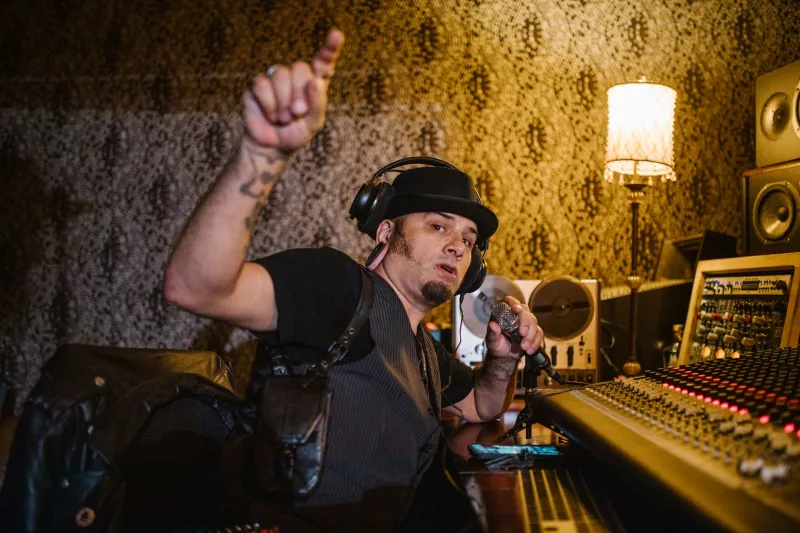
There is a particular kind of silence that descends on a neighborhood after it has been remade. The corner store is gone. The barbershop has become a juice bar. The voices that once filled that block — arguing, laughing, preaching, selling — exist nowhere except in the memories of people who are themselves being quietly pushed out. For a growing number of hip-hop and electronic music producers across the United States, the act of recording those voices before the silence arrives has become both artistic mission and moral imperative.
This is not merely a story about sampling. It is a story about who gets to decide what sounds are worth keeping.
The Neighborhood as Instrument
Producers working in cities from Detroit to New Orleans to the South Bronx have long understood that the environment itself is a musical collaborator. The rhythmic clatter of a subway grate, the cadence of a street vendor's call, the overlapping conversations outside a church on a Sunday morning — these are not incidental textures. For artists who grew up inside these soundscapes, they carry the weight of lived experience that no studio session can manufacture.
What has shifted in recent years is the intentionality of the documentation. Where earlier generations of producers might have lifted a sample from a vinyl record, a younger cohort is going directly to the source. Armed with field recorders, smartphones, and an acute awareness of what urban redevelopment tends to erase, these artists are conducting what amounts to ethnographic fieldwork — though they would likely resist that academic framing.
The results are compositions that function on multiple registers simultaneously. On one level, they are songs. On another, they are testimonials. A beat constructed around a grandmother describing her block in 1987 is doing something qualitatively different from a beat built on a session musician's performance. It is placing a specific human being — one whom history has largely ignored — at the center of a cultural artifact that may outlast the neighborhood itself.
Counter-Narrative as Craft
The commercial music industry has always had a complicated relationship with authenticity. Marketing language borrows heavily from the vocabulary of community and struggle, even as production pipelines tend to flatten regional particularity into something more universally palatable. The artists examined here are, in many respects, working against that tendency.
Consider the broader movement visible in cities like Chicago, Baltimore, and Houston, where producers have built entire projects around oral histories gathered from elders, formerly incarcerated residents, and immigrant community members. These are not tokenistic gestures. The recordings are frequently placed prominently in the mix — not buried beneath layers of instrumentation, but foregrounded in a way that demands the listener actually hear what is being said.
This approach carries a deliberate political charge. When a voice that has been systematically excluded from mainstream representation is placed at the center of a widely distributed cultural product, the act of listening becomes something more than passive entertainment. It becomes an encounter with a perspective that commercial media has, by and large, chosen not to amplify.
The Tension Between Documentation and Exploitation
It would be dishonest to present this movement without acknowledging the ethical complexities it raises. The history of American popular music is, in no small part, a history of cultural extraction — of sounds and styles developed within marginalized communities being absorbed, repackaged, and profited from by those with greater access to distribution and capital.
The producers working in this tradition are acutely aware of that history, and many have developed deliberate practices to navigate it. Consent and compensation are central considerations. Several artists have spoken publicly about the importance of returning to the communities whose voices appear in their work — not only to obtain permission, but to share revenue and credit in ways that the broader industry rarely mandates.
Still, questions persist. When a neighborhood voice is transformed into a commercially viable product, who benefits? Does the original speaker retain meaningful ownership of their contribution? And what happens when the very act of amplification draws the kind of mainstream attention that accelerates the displacement the artist sought to document?
These are not questions with easy answers. They are, however, questions that the most thoughtful practitioners in this space are actively wrestling with — which is itself a meaningful departure from industry norms.
Preservation as Resistance
Perhaps the most striking aspect of this movement is how it reframes the relationship between artistic production and cultural preservation. Institutions — libraries, universities, historical societies — have long held a monopoly on deciding what sounds, stories, and artifacts are worth archiving. The criteria applied have not always been neutral, and the communities most in need of documentation have often been the least served by formal preservation infrastructure.
Hip-hop producers working in this mode are, in effect, building parallel archives. Their albums, mixtapes, and digital releases constitute a distributed record of community life that exists outside institutional gatekeeping. The accessibility of streaming platforms means these documents can reach audiences across geographic and generational lines in ways that a university archive simply cannot.
This is not to suggest that informal preservation is without its own vulnerabilities. Digital platforms are commercially owned and subject to the decisions of corporations whose interests do not necessarily align with cultural continuity. A streaming service can be shuttered. A hard drive can fail. The fragility of privately held digital heritage is a genuine concern — one that the broader conversation about community archiving must continue to address.
Listening Differently
What these artists are ultimately asking of their audiences is a different quality of attention. The sonic landscape of a neighborhood — its textures, its voices, its rhythms — is not background noise. It is evidence of a particular way of inhabiting the world, one that deserves to be heard on its own terms rather than processed through the filters of commercial palatability.
The producers who are doing this work most rigorously understand that they are not simply making music. They are making an argument about what counts as culture, who counts as a cultural producer, and which communities deserve to see themselves reflected in the art that circulates in their name.
That argument, carried in the grooves of a beat, may be the most persuasive form it can take.