Whose Walls, Whose Stories? The Quiet Revolution Reshaping America's Museums from Within
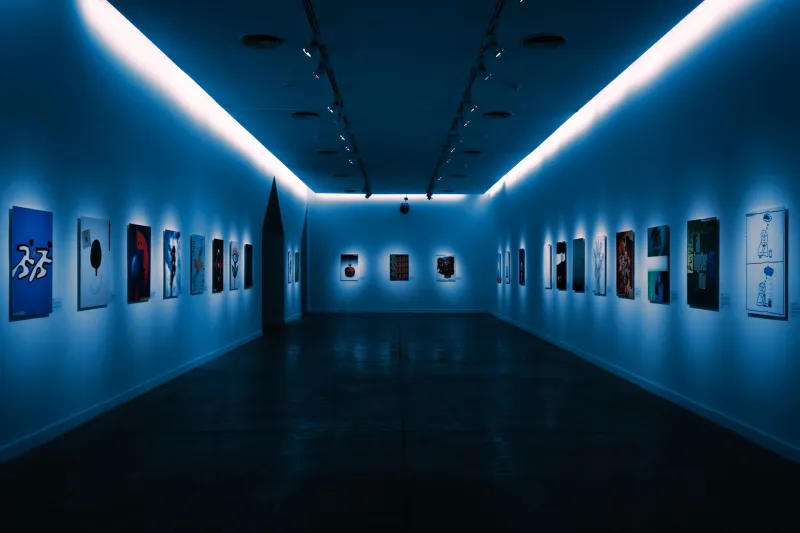
When the Denver Art Museum announced in 2022 that it would restructure its curatorial departments to center community partnerships in acquisition decisions, the response was swift and divided. Longtime donors expressed concern about institutional mission drift. Emerging scholars and community organizations celebrated what they called an overdue reckoning. The episode, unremarkable in isolation, was in fact a microcosm of a transformation playing out in galleries, boardrooms, and loading docks from Boston to Los Angeles.
American museums are, in the most literal sense, reconsidering what belongs on their walls—and, more critically, who gets to make that determination.
A System Built on Exclusion
To understand the urgency of today's conversations, it helps to understand the historical architecture of museum collecting. The great American encyclopedic museums—the Metropolitan, the Art Institute of Chicago, the Philadelphia Museum of Art—were largely assembled during the Gilded Age and early twentieth century. Their collections reflect the tastes, networks, and blind spots of predominantly white, male, and wealthy benefactors who operated within a cultural framework that treated European artistic traditions as the universal standard.
The consequences were not passive. Communities of color, Indigenous nations, immigrant populations, and working-class Americans were either absent from these collections or represented in ways that reinforced stereotypes rather than honoring complexity. Objects were sometimes acquired through transactions that today would be recognized as coercive. Stories were flattened to fit the expectations of a presumed white audience.
"The museum was never a neutral space," says Dr. Amara Osei, a cultural equity consultant who has worked with several mid-size institutions on collection audits. "It was always making an argument about whose civilization mattered. What we're doing now is making that argument visible so we can have an honest conversation about it."
Curators at the Crossroads
For working curators, the current moment is both galvanizing and exhausting. Many entered the field out of genuine passion for art and history, only to find themselves navigating institutional politics that can feel as formidable as the collections they steward.
Chidinma Eze, a curatorial associate at a major Northeastern museum who asked that her institution not be named, describes the tension candidly. "You can write the proposal for acquiring a contemporary work by a Black artist from the American South. You can make the scholarly case. But the acquisition committee is still largely composed of people who may not see that work as fitting the collection's 'aesthetic coherence.' That phrase does a lot of heavy lifting."
Some institutions are attempting to dismantle these informal gatekeeping mechanisms by restructuring acquisition committees to include community representatives, artists, and scholars from outside traditional academic pipelines. The Smithsonian's National Museum of the American Indian has long operated under a model that centers Indigenous voices in interpretive decisions. Other institutions are beginning to follow a similar logic, if not always the same formal structure.
Yet structural change is slow, and the resistance is often subtle. Budget constraints are invoked to delay diversity initiatives. Curatorial autonomy—a legitimate and important professional value—is sometimes weaponized to resist community input. Donors who fund acquisitions may attach informal conditions about the kinds of work they wish to support.
The Community Advocacy Surge
Outside institutional walls, a parallel movement is applying direct pressure. Organizations such as the Museum Hue collective and the Empathetic Museum project have spent years documenting the demographic gaps in museum leadership and building public accountability frameworks. Their argument is straightforward: institutions that receive public funding and claim to serve the public good should reflect the public they serve.
That argument is increasingly landing. Several cities have begun tying municipal arts funding to measurable diversity benchmarks. Philanthropic foundations, including the Mellon Foundation, have made significant investments in diversifying museum leadership pipelines—recognizing that curatorial culture shifts only when the people making decisions shift as well.
"Representation in leadership is not a symbolic gesture," notes Marcus Tillman, a program officer at a Midwest arts foundation. "It changes what questions get asked in the room, which collections get prioritized, which communities get called for consultation. It changes the institution's relationship to its own city."
Progress, Resistance, and the Long Game
The evidence of change is real, if uneven. The Museum of Fine Arts in Boston, long criticized for its relationship with communities of color, has undertaken visible reinterpretation projects and community partnerships. The Los Angeles County Museum of Art has made acquisitions in recent years that significantly expand its representation of Latin American and Asian American artists. Dozens of regional museums have begun formal provenance review processes for objects that may have been acquired under ethically questionable circumstances.
At the same time, high-profile controversies—over Native American repatriation, over the display of human remains, over institutional responses to social justice movements—have demonstrated that goodwill and stated commitment do not automatically translate into structural change. The American Alliance of Museums has updated its ethical guidelines, but enforcement mechanisms remain limited.
What is perhaps most significant about this moment is that the conversation itself has become unavoidable. The questions being raised—about authority, about representation, about the relationship between cultural institutions and the communities they claim to serve—are no longer confined to academic journals or activist circles. They are appearing in board meeting agendas, in donor conversations, in the op-ed pages of mainstream publications.
"Museums have survived by being essential," reflects Dr. Osei. "The question now is whether they can redefine what essential means—not just for the people who've always felt at home inside them, but for everyone."
The walls are not coming down. But for the first time in many institutions' histories, the question of what belongs on them is genuinely open.