Who Owns the Story? The Growing Demand for Community Authority Over Cultural Representation
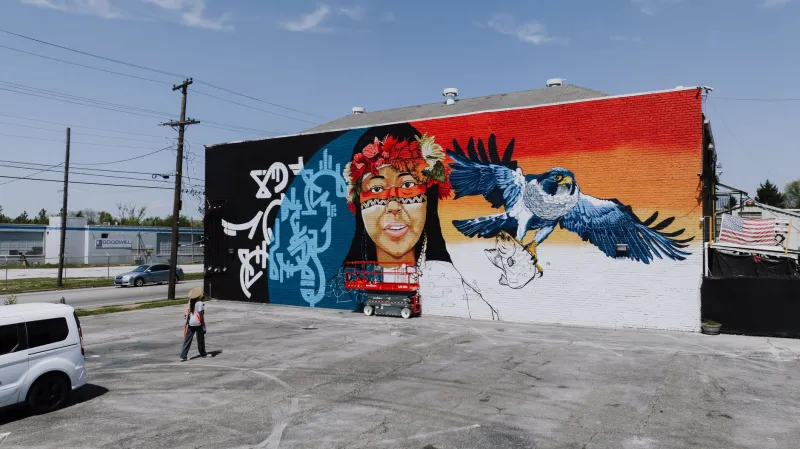
There is a particular kind of discomfort that arises when you encounter your own community rendered by someone who has studied it from the outside. The details may be technically accurate. The intentions may be genuinely sympathetic. And yet something in the portrait feels subtly, persistently wrong — as though the most important things have been translated into a language that almost, but not quite, captures their meaning. This experience is not a curiosity or an edge case. For many communities in the United States — Indigenous nations, immigrant groups, communities of color, regional and religious minorities — it is the defining condition of their relationship to mainstream cultural institutions.
The question of who gets to tell a community's story is not merely a matter of artistic preference. It is a question of power, of historical accountability, and of what we collectively decide constitutes authoritative knowledge about a people and their culture. And it is a question that is being asked with increasing urgency and sophistication across American cultural life.
The Institutional Presumption
For most of American cultural history, the answer to the question of narrative authority was assumed rather than argued. Universities, museums, documentary filmmakers, journalists, and publishing houses operated from an implicit premise: that professional training and institutional affiliation conferred the standing to interpret any community, provided the research was conducted rigorously. This presumption was rarely examined, in part because the communities being interpreted rarely had access to the platforms through which such examinations might be conducted.
The consequences of this arrangement have been substantial. Academic anthropology spent much of the twentieth century producing accounts of Indigenous communities that those communities found distorting, dehumanizing, or outright fabricated. Major museums built collections of sacred objects acquired under conditions that ranged from ethically questionable to legally criminal. Documentary films presented immigrant and working-class communities in ways that their subjects experienced as exploitative. Literary publishing celebrated works about marginalized communities written by authors with no meaningful connection to them, while consistently underfunding and under-promoting work produced by community members themselves.
None of this is ancient history. The controversies are ongoing, active, and frequently erupting into public view.
Recent Fault Lines
In 2022, the Smithsonian's National Museum of the American Indian became the center of a renewed debate when several tribal nations publicly objected to the framing of specific exhibits, arguing that the museum's interpretive choices — made with significant but not decisive tribal consultation — still reflected institutional rather than community priorities. The dispute illuminated a dynamic that many heritage professionals privately acknowledge: consultation is not the same as control, and the difference matters enormously.
Similarly, in the literary world, the past several years have seen sustained and substantive debate about the publication of novels depicting communities — particularly communities of color and immigrant communities — by authors who do not belong to those communities. Critics of this practice are not arguing for a rigid biographical determinism. They are making a more nuanced point: that when publishing resources are scarce and community writers are consistently passed over in favor of outside interpreters who are deemed more commercially viable or institutionally legible, the result is a systematic distortion of whose voices shape the public understanding of a culture.
Documentary film has faced parallel scrutiny. Several high-profile projects in recent years have drawn criticism from the communities they profiled, with subjects arguing that their stories were shaped to fit narratives that served the filmmakers' interests — whether those interests were aesthetic, commercial, or ideological — rather than the communities' own understanding of their experience.
The Case for Community-Led Storytelling
The argument for community authority over cultural representation is sometimes caricatured as a demand for insularity or ideological purity. It is neither. The most thoughtful advocates for community-led storytelling are not arguing that outsiders can never contribute meaningfully to the interpretation of a culture. They are arguing something more specific and more defensible: that communities must have genuine decision-making authority — not merely advisory roles — over how their histories and identities are represented in public cultural spaces.
This distinction matters because it changes the relationship between communities and institutions from one of subject and interpreter to one of partnership with shared stakes. When a community organization controls the framing of an exhibition, produces its own documentary, or publishes its own literary anthology, the result is not necessarily a more flattering portrait. It may in fact be a more complicated, more internally contested, and more honest one — precisely because community members are not required to manage the expectations of an outside audience or the preferences of an institutional patron.
The evidence from community-led cultural projects supports this view. Initiatives such as the Densho Project — a Seattle-based organization that has spent decades collecting and preserving the oral histories of Japanese American incarceration survivors — demonstrate that community-controlled archives can achieve both scholarly rigor and deep cultural authenticity. The project's materials are now used by historians, educators, and filmmakers, but the interpretive authority has remained consistently with the Japanese American community. The result is a resource that is trusted precisely because it was not filtered through an institutional gaze.
What Institutions Can Do Differently
Advocating for community authority does not require the wholesale dismantling of cultural institutions. It does require those institutions to examine, honestly and specifically, where their authority comes from and whether it is legitimate. Museums can move from consultation to co-governance. Universities can restructure hiring and publishing practices to genuinely prioritize community scholars. Documentary and journalism organizations can build long-term relationships with communities rather than arriving, extracting a story, and departing.
These changes are not cosmetic. They require the redistribution of resources, decision-making power, and professional recognition. That is precisely why they are difficult and why they are necessary.
The Stakes for Future Generations
The communities engaged in these debates are not simply arguing about the past. They are arguing about the conditions under which future generations will understand who they are and where they come from. When a child encounters their community's history in a museum, a documentary, or a school curriculum, the framing of that encounter shapes something fundamental about their sense of self and belonging.
At Thiqar Arts & Heritage, we believe that cultural integrity is inseparable from narrative authority. The stories that communities carry — their histories of resilience, complexity, struggle, and creativity — are not raw material available for outside extraction. They are living inheritances, and the communities that hold them deserve the standing to determine how those inheritances are shared, honored, and passed forward. The conversation about who owns the story is, ultimately, a conversation about who we trust to tell the truth about ourselves. The answer, we would argue, begins at home.