The Calendar Is Not a Commitment: Why Heritage Months Cannot Substitute for Year-Round Cultural Funding
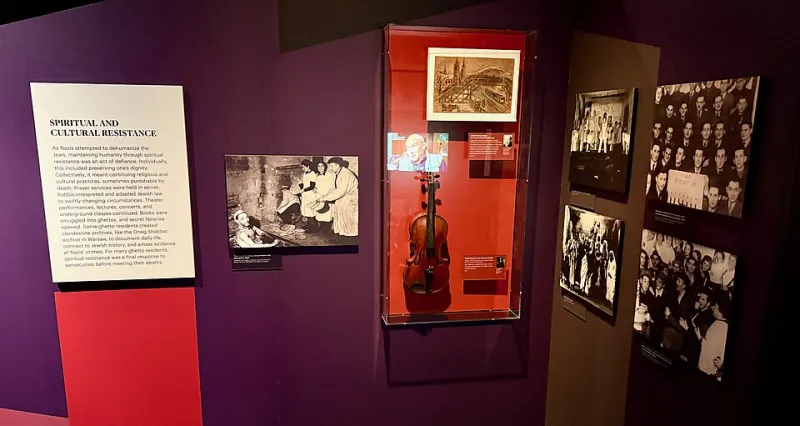
Photo: Oleg Yunakov, CC BY-SA 4.0, via Wikimedia Commons
The banner comes down at the end of November. The display case is emptied, the social media posts slow, and the school assembly gives way to the winter calendar. Native American Heritage Month 2026 will have produced many thoughtful programs, and those programs matter. But the end of the month also exposes a persistent weakness in how American institutions treat cultural heritage: as a rotating slot rather than a sustained relationship. The calendar is not a commitment. If museums, schools, and funders want to honor heritage, they must build structures that remain visible after the banner is folded and stored.
The Seasonal Model and Its Limits
Heritage months serve a purpose. They create openings for public education, they justify temporary funding, and they give communities a platform they might otherwise lack. Yet the seasonal model also encourages a checkbox approach. A museum can mount one exhibition, a school can host one speaker, and a funder can issue one grant cycle, all while treating the rest of the year as business as usual. For communities whose cultures are not confined to a month, the effect is a strange kind of visibility: honored in the abstract, under-resourced in practice. The problem is not the month itself. The problem is the assumption that the month is enough.
What Community Archivists Actually Need
Consider the work that heritage months often celebrate: language preservation, oral history, textile and craft traditions, foodways, music, and local archival care. Much of this work is done by community archivists who are unpaid, underpaid, or employed on short-term contracts. They are the people who record elders, translate documents, digitize photographs, and maintain the relationships that make cultural knowledge accessible. A year-round commitment would begin with paying them properly. It would fund storage, equipment, translation, and consent-based digitization. It would support community-led programming in January and July as readily as in November. These are not glamorous expenses, but they are the infrastructure of memory.
Funding That Outlasts the Banner
Funders often prefer visible, time-bound projects because they are easier to evaluate. A heritage-month exhibition has clear outputs: visitors, panels, a catalog. Year-round cultural care is harder to measure, but it is more durable. Multi-year general operating grants would allow community organizations to plan beyond the next fiscal quarter. Paid fellowships for young archivists would keep knowledge from leaving when a grant ends. Partnerships with public libraries and local museums could provide stable space and equipment. None of this requires inventing a new system. It requires treating cultural heritage as ongoing public work rather than a special event.
The Case for Everyday Infrastructure
Infrastructure is the word we use for things we expect to be there every day: roads, water, schools, libraries. Cultural heritage belongs in that category. A community's ability to tell its own story, in its own language, with its own materials, is not a luxury add-on to civic life. It shapes how children understand themselves, how neighborhoods negotiate change, and how institutions earn trust. When heritage is treated as seasonal programming, it becomes easy to cut. When it is treated as infrastructure, the question shifts from 'Can we afford a display?' to 'What does it take to keep this work alive?'
A Different Calendar
The end of Native American Heritage Month 2026 is a good moment to ask what comes next. The answer should not be a countdown to next November. It should be a budget line, a staff position, a multi-year agreement, a paid community archivist, and a standing invitation to programming that does not depend on the calendar. Heritage months can remain useful entry points. But they cannot carry the weight of a year. If institutions want to move beyond the checkbox, they must commit to the unglamorous, ongoing work of cultural infrastructure. That is the difference between honoring a community and merely scheduling it.