The Signal Next Door: Why Community Radio Remains Cultural Infrastructure
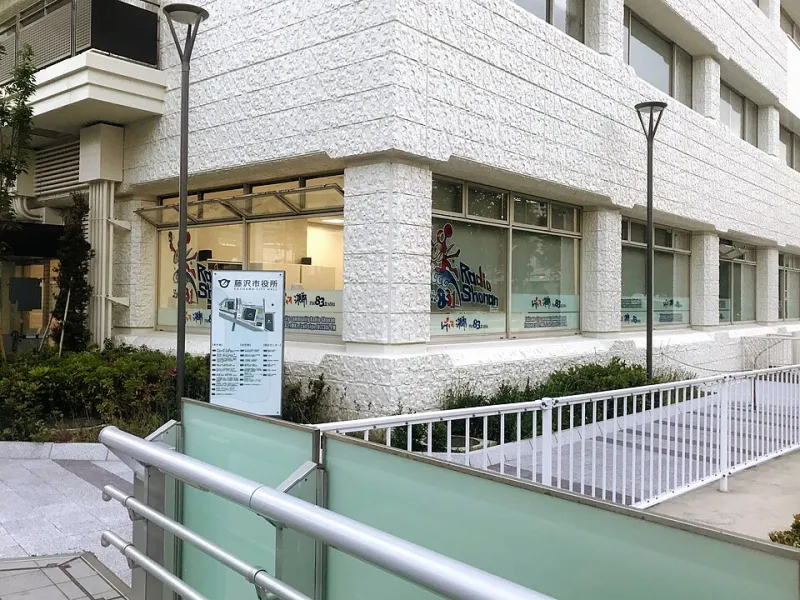
Photo: Yoh-Plus, CC BY 4.0, via Wikimedia Commons
The most important radio station in a town may be the one nobody outside the zip code can hear. Low-power FM stations, often run by volunteers from small studios and borrowed rooms, operate at the margins of the American media system. They are not ratings giants. They are not likely to be acquired by a conglomerate. But in many communities they function as cultural infrastructure, carrying the languages, music, memories, and local news that larger outlets overlook.
As of 2026, the media environment is dominated by streaming platforms, podcast networks, and algorithmic recommendation. That makes community radio seem quaint to some observers. The judgment is premature. A platform can deliver infinite content, but it cannot necessarily tell a listener what is happening at the school board, which church is hosting a language class, or which local musician just released a record. Community radio can. Its value lies less in scarcity of signal than in specificity of purpose.
A Short History of a Small Signal
The modern low-power FM service in the United States took shape after the Federal Communications Commission created a new class of licenses in 2000. The Local Community Radio Act of 2010 expanded the opportunity for nonprofits, schools, and community groups to apply. The policy was never only technical. It was a statement that local voices deserved access to the public airwaves, even when they could not afford full-power stations.
The resulting stations vary widely. Some broadcast from universities. Some are housed in libraries, churches, or cultural centers. Some serve rural counties where commercial radio offers little beyond syndicated programming. Others operate in dense cities, where they carve out space for immigrant communities, local music scenes, and neighborhood affairs. The common thread is not format but accountability. These stations are close enough to their listeners to be corrected by them.
The Cultural Work Behind the Console
Community radio performs several kinds of cultural labor at once. The first is language. Immigrant-language programs provide news, music, and public information to listeners who may not be served by English-language media. These programs are not merely translations of mainstream content. They carry home-country news, religious observance, legal information, and cultural commentary that reflect the lives of specific communities.
The second is music. Local radio remains one of the few places where regional musicians can be heard alongside familiar voices. A station may play Tejano, gospel, bluegrass, hip-hop, or experimental sound art, depending on the community. The point is not niche taste for its own sake. It is the creation of a listening public that can recognize itself.
The third is memory. Oral-history programs, call-in shows, and interviews with elders turn radio into an informal archive. A station may record a conversation with a retired dockworker or a neighborhood historian and broadcast it at a time when people are driving home. The recording may later be deposited with a local library. In this way, radio becomes a link between daily conversation and historical preservation.
The Economics of Proximity
None of this is free. Community stations operate on thin margins. They rely on listener donations, underwriting, grants, benefit concerts, and volunteer labor. Equipment ages. Studios need repairs. FCC compliance requires recordkeeping and technical care. Volunteer burnout is a persistent problem, especially when a few people handle programming, fundraising, and engineering at once.
The economics are difficult precisely because the mission is local. A station cannot easily scale its most valuable content, because that content is tied to a place. A program about a city council race in one town has little value in another. This is not a weakness to be engineered away. It is the nature of the service. The challenge is to build funding models that respect local specificity rather than demanding homogeneity.
Why the Signal Matters Beyond Its Range
It is tempting to measure community radio by its audience size. That metric misses the point. A station with a few thousand listeners may be the only consistent source of information for a particular immigrant group, the only broadcaster playing a regional genre, or the only place where a neighborhood's oral history is aired. Its influence can extend through schools, libraries, and community organizations that use its recordings and archives.
The fragility of these stations is therefore a civic issue. When a small station goes dark, the loss is not just a frequency. It is a network of volunteers, a archive of local recordings, and a habit of public conversation. Policymakers, funders, and cultural institutions should treat community radio as part of the local heritage infrastructure, alongside museums, libraries, and historic sites.
Keeping the Dial Human
Community radio is not a solution to every media problem. It can be insular, underfunded, and uneven in quality. It can reproduce the same access barriers it hopes to challenge. But at its best, it offers something that algorithmic media struggles to provide: a human-scale public square, scheduled by people who live nearby and answerable to listeners who can walk into the studio.
In a media landscape that grows more consolidated and more automated, that is not nostalgia. It is infrastructure. The signal next door may be small, but it carries a town's voice back to itself.