Where the Amateurs Gather: Seven Unlikely Stages Keeping Folk Tradition Alive
Against the Museum Model
There is a persistent assumption that folk traditions survive through institutions: archives, festivals, endowed societies. The evidence on the ground suggests otherwise. The traditions thriving in America today — square dancing, shape-note singing, weaving, old-time music — are sustained overwhelmingly by amateurs who gather in borrowed spaces, pass a hat, and return next week. What follows is a partial map of that unofficial country.
1. The Brooklyn Warehouse Square Dance
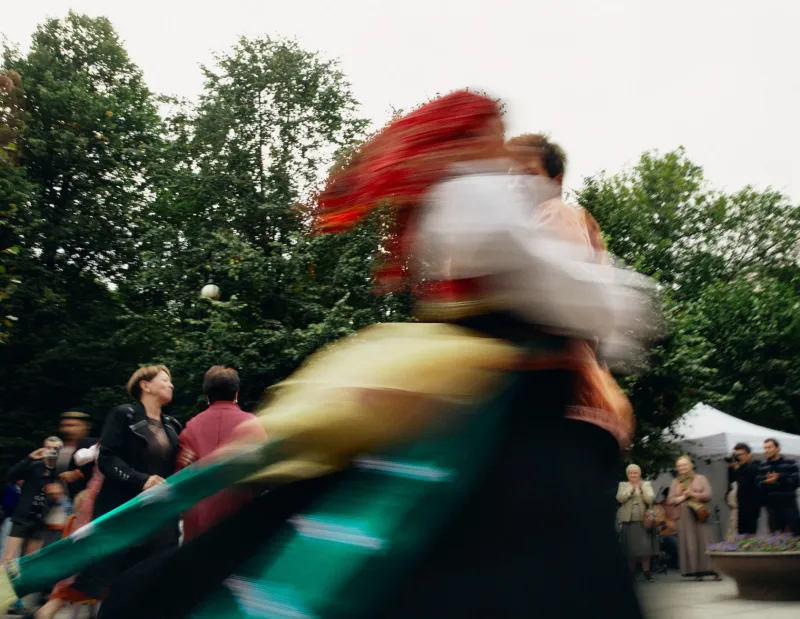
In a converted industrial loft in Bushwick, twenty- and thirty-somethings trade partners to the calls of a caller who learned the trade at Appalachian summer camps. No alcohol, no experience required, live old-time band. Attendance has tripled since the pandemic, suggesting that a generation raised on screens has developed an appetite for embodied, communal rhythm.
2. The Shape-Note Singing in a College Gymnasium
Shape-note singing, the raw four-part harmony tradition of the American South, has found unlikely hosts in university gymnasiums across New England and the Midwest. Singers sit in a hollow square, take turns leading, and sing at a volume that startles first-timers. The tradition is now as likely to flourish in a college town as in an Alabama church hall.
3. The Weaving Circle in a Cohousing Common Room
In a Colorado cohousing community, residents gather weekly around floor looms and drop spindles, teaching one another in the oldest pedagogical method available: watching, imitating, and correcting. Several participants learned from YouTube tutorials before ever touching wool — a reminder that digital tools can be a doorway into analog practice rather than a replacement for it.
4. The Laundromat Jam Session
In a handful of Southern cities, laundromat owners host bluegrass and gospel jams during evening wash cycles. Benches become pews, folding chairs become the green room. The venue costs nothing, and the audience arrives with a captive forty minutes.
5. The Polka Night at the VFW Hall
In Texas and the upper Midwest, VFW and American Legion halls continue hosting polka and conjunto nights that bridge generations of dancers. The halls are aging; the dance floors are not empty.
6. The Storytelling Open Mic in a Bookstore Basement
Long-form oral storytelling, a tradition older than print, thrives in bookshop basements from Portland to Asheville, where amateurs tell true stories without notes to a listening room.
7. The Barn Dance That Moved to the Farm's Front Lawn
When rural venues closed, some organizers simply moved the dance outdoors — potluck, portable speakers, lanterns on hay bales.
The Argument for Showing Up
The lesson across all seven sites is consistent: tradition is a verb performed by non-professionals. Institutions can document culture; only communities can practice it. Thiqar Arts & Heritage exists to celebrate that practice — because heritage is not what we store, but what we repeat, together, on an ordinary weeknight.