Creative Ground: The Arts Programs Quietly Redefining Healing and Justice Inside America's Hardest Spaces
The room at Rikers Island Correctional Facility does not look like a theater. The fluorescent lighting is institutional. The chairs are plastic. The audience—correctional officers, fellow incarcerated individuals, a handful of outside observers—sits in rows that leave little room for imagination. And then the performance begins, and the room becomes something else entirely.
The ensemble onstage is part of the Rehabilitation Through the Arts program, one of the longest-running and most rigorously evaluated arts initiatives operating inside the American correctional system. For the past several decades, RTA has offered theater, creative writing, and visual arts programming across multiple New York State facilities. Its participants are serving sentences ranging from months to decades. Its results, documented through independent academic research, are striking: participants show significantly lower recidivism rates than the general incarcerated population, and qualitative reports describe transformations in self-perception, empathy, and social competence that standard rehabilitative programming rarely achieves.
But RTA is not alone. Across the United States, a constellation of arts-based programs is quietly working in the spaces where conventional systems have most conspicuously failed—and building a body of evidence that creative engagement is not a luxury supplement to rehabilitation and justice. It may be one of its most effective engines.
Why Art Works Where Punishment Often Doesn't
The theoretical framework underlying these programs is not new. Expressive arts therapy has been practiced in clinical settings for decades, and the relationship between creative engagement and psychological resilience is well-documented in the research literature. What is newer is the application of these principles at scale within criminal justice and community trauma contexts, and the growing willingness of administrators and policymakers to take the evidence seriously.
Dr. Laurie Brooks, a trauma-informed care specialist who consults with several correctional arts programs, describes the mechanism in straightforward terms. "Incarceration, and the trauma that often precedes it, tends to produce profound disconnection—from one's own emotions, from other people, from any sense of agency over one's own narrative. The arts create a structured space to reconnect with all of those things. You have to feel something to make something. That's not a small thing in an environment designed to suppress feeling."
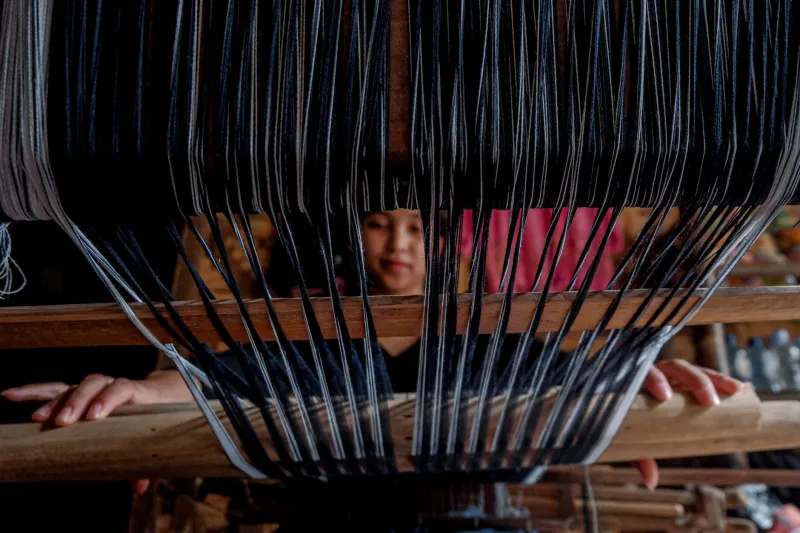
The programs themselves vary enormously in form. Some are rooted in theater and performance. Others center visual arts, music, creative writing, or textile traditions with deep cultural resonance for specific communities. What they share is a commitment to participant agency—the understanding that the creative process is therapeutic not because it is supervised, but because it is genuinely self-directed.
Profiles in Practice
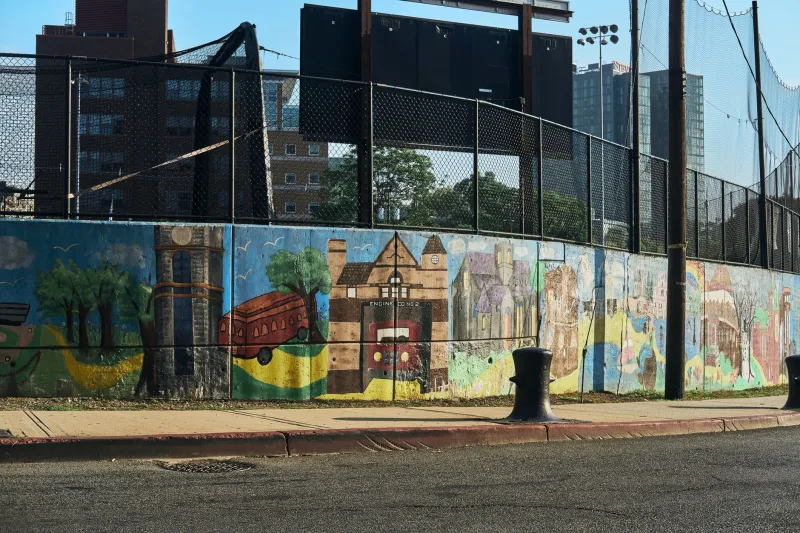
The Mural Arts Philadelphia Restorative Justice Program has spent more than two decades bringing incarcerated individuals, crime survivors, and community members together around large-scale public art projects. The work is not merely symbolic. Participants—including both people who have caused harm and those who have experienced it—collaborate on design decisions, engage in structured dialogue facilitated by trained practitioners, and ultimately produce works of public art that remain visible in their communities long after the program concludes.
For Marcus Greene, who participated in the program following a serious assault conviction, the experience was disorienting in ways he now describes as necessary. "They put me in a room with the family of someone I'd hurt. Not my victim specifically, but people who knew that kind of loss. And then they asked us to make something together. I didn't know how to do that. I still don't, completely. But trying to do it changed something in me."
The Prison Creative Arts Project, based at the University of Michigan, operates in a different register—emphasizing fine arts, creative writing, and theater across more than two dozen Michigan correctional facilities. PCAP does not frame its work primarily as therapeutic, a distinction its directors consider important. "We're not here to fix people," says program coordinator Elena Reyes. "We're here to make art with people who deserve access to artistic expression regardless of what they've done. The healing that happens is real, but it's a consequence of genuine creative engagement, not a clinical goal imposed from outside."
This distinction matters philosophically and practically. Programs that position themselves as therapy can inadvertently reproduce the power dynamics of the carceral system they are trying to supplement. Programs that center artistic authenticity tend to generate greater participant investment—and, perhaps counterintuitively, more profound personal transformation.
Roots of Music, operating in New Orleans, works not inside a correctional facility but in a community that has experienced the kind of concentrated, multigenerational trauma that correctional intervention alone has never been able to address. The program provides free after-school music education to middle schoolers in historically underserved neighborhoods, with an explicit awareness that music education in this context is inseparable from cultural heritage—the jazz and second-line traditions that are the living inheritance of New Orleans' Black communities.
"We're not just teaching kids to play instruments," says executive director Damaris Allen. "We're teaching them that they come from somewhere, that their culture produced something the whole world values, that they have a right to that inheritance. That's identity-building. And identity is the foundation of resilience."
Funding, Scale, and the Policy Gap
For all their documented effectiveness, arts-based justice and healing programs operate in a chronic state of resource precarity. Most depend on a patchwork of foundation grants, individual donations, and occasional government contracts that makes long-term planning difficult and expansion nearly impossible. The programs that have achieved the greatest scale—RTA, Mural Arts, PCAP—have done so through decades of relationship-building and an unusual combination of institutional persistence and community trust.
Policymakers are beginning to pay attention, if slowly. Several states have included arts programming in criminal justice reform legislation, and the federal Second Chance Act has provided limited funding streams for innovative reentry programming. Advocates argue that the evidence base now exists to justify a far more substantial public investment.
"We have decades of data," says Dr. Brooks. "Reduced recidivism. Improved mental health outcomes. Stronger community ties. These are the metrics the criminal justice system says it cares about. The question is whether it's willing to fund the approaches that actually produce them."
In the meantime, the work continues in fluorescent-lit rooms and community centers and school gymnasiums—unglamorous spaces where something that looks, on the surface, like art-making is quietly doing the harder work of putting people back together.