The Festival Paradox: When Cultural Celebrations Risk Displacing the Communities They Honor
Every summer, across neighborhoods from the Mission District in San Francisco to Pilsen in Chicago to Flushing in Queens, streets fill with the sights and sounds of cultural heritage. Festivals dedicated to music, food, craft, and tradition draw visitors from well beyond the immediate community. Local organizers spend months in preparation. The energy is genuine. The pride is real.
And yet, for a growing number of community advocates and cultural economists, these same festivals have become a source of serious concern. The question being asked with increasing urgency is not whether such events are worth celebrating, but rather: who, precisely, is doing the celebrating — and at whose expense?
The Promise of the Cultural Festival
The community arts festival, in its idealized form, is a vehicle for exactly the kind of visibility and economic opportunity that historically marginalized neighborhoods have been denied. It creates a platform for local artists who lack access to mainstream gallery and performance circuits. It generates foot traffic that benefits small businesses. It signals to city governments and funders that a community's cultural life is vibrant and worthy of investment.
These are not trivial benefits. For many immigrant communities, Indigenous groups, and communities of color across the United States, the annual festival has served as one of the few occasions on which their heritage receives public recognition rather than institutional neglect. The social and psychological value of that recognition should not be underestimated.
Nor should the economic potential. When well-structured and equitably managed, a neighborhood festival can direct meaningful revenue toward local vendors, performers, and artisans — creating a genuine, if temporary, economic ecosystem rooted in cultural production.
Where the Promise Breaks Down
The difficulty is that festivals are rarely as well-structured or equitably managed as the promotional materials suggest. A closer examination of how many community arts events are organized reveals a series of structural problems that tend to concentrate benefits among outside stakeholders while placing the burden of labor and risk on community members themselves.
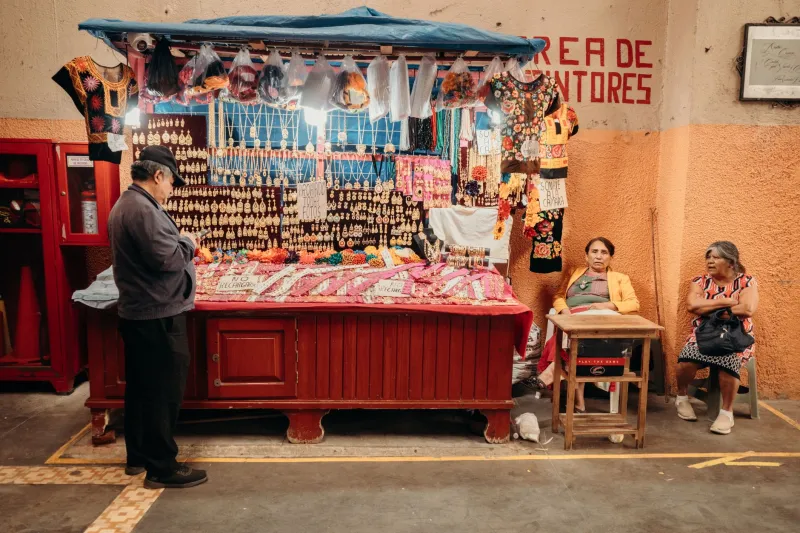
Consider the question of vendor access. In numerous documented cases, local artisans and food vendors — the very people whose traditions give a festival its identity — find themselves priced out of participation by booth fees that have been calibrated to attract regional and national vendors with larger operating budgets. The neighborhood's cultural heritage becomes the draw; the neighborhood's residents become the audience rather than the beneficiaries.
Similarly, the labor of festival organization frequently falls on community volunteers and underpaid local staff, while contracts for logistics, security, marketing, and entertainment are awarded to outside firms. The economic multiplier effect that festival organizers cite in grant applications often circulates well beyond the neighborhood in question.
The Gentrification Question
Perhaps the most uncomfortable dimension of this conversation concerns the relationship between cultural visibility and real estate pressure. There is now a substantial body of research suggesting that the elevation of a neighborhood's cultural profile — through festivals, arts programming, and media coverage — can function as a precursor to displacement, even when the elevation is undertaken with entirely sincere intentions.
The mechanism is not mysterious. When a neighborhood becomes associated with a particular cultural identity that mainstream audiences find appealing, it attracts attention from real estate developers, upscale businesses, and higher-income residents. Property values rise. Rents follow. The community whose heritage provided the original attraction finds itself unable to afford the neighborhood it made desirable.
This dynamic has been observed in neighborhoods across the country, from the historically Black districts of Washington, D.C., to the Latino enclaves of Los Angeles's Eastside. Festival organizers who are not actively thinking about displacement risk are, whether they intend to or not, participating in a process that may ultimately harm the communities they are ostensibly serving.
Case Studies in Contrast
It is important to note that the festival-as-displacement-accelerant is not an inevitable outcome. There are instructive counterexamples — events that have been deliberately structured to keep economic benefit within the community and to build long-term institutional capacity rather than simply generating a single weekend of visibility.
Community land trusts in several cities have begun partnering with festival organizers to ensure that increased neighborhood visibility does not translate into unchecked real estate speculation. Some festivals have adopted vendor selection processes that explicitly prioritize local, community-based businesses and artists, with subsidized participation fees for those who cannot meet market-rate costs. Others have established community benefit agreements with city governments as a condition of receiving public funding.
These models are not without their own complications — questions of who defines "community" and who holds decision-making authority are perennial sources of tension. But they represent a meaningful attempt to align the structure of a festival with its stated values.
Asking Better Questions
For community organizers, funders, and city officials who are genuinely committed to festivals that serve rather than extract, the work begins with a willingness to ask uncomfortable questions before the planning process begins rather than after the damage is done.
Who controls the organizational infrastructure of this event? Where do the revenues flow, and how much returns to the community? What protections are in place to ensure that increased visibility does not accelerate displacement? Are local artists and vendors participating as principals or as decorative elements in an event designed primarily for outside consumption?
These are not questions that undermine the value of cultural celebration. They are, in fact, the questions that make genuine celebration possible — by ensuring that the people at the heart of a tradition are also the people who benefit from its recognition.
A festival that honors a community's heritage while quietly undermining that community's ability to remain in place is not a cultural celebration. It is something considerably more troubling, dressed in festive colors.