The Ledger Is a Form of Respect: Why Exposure Cannot Sustain a Heritage Economy
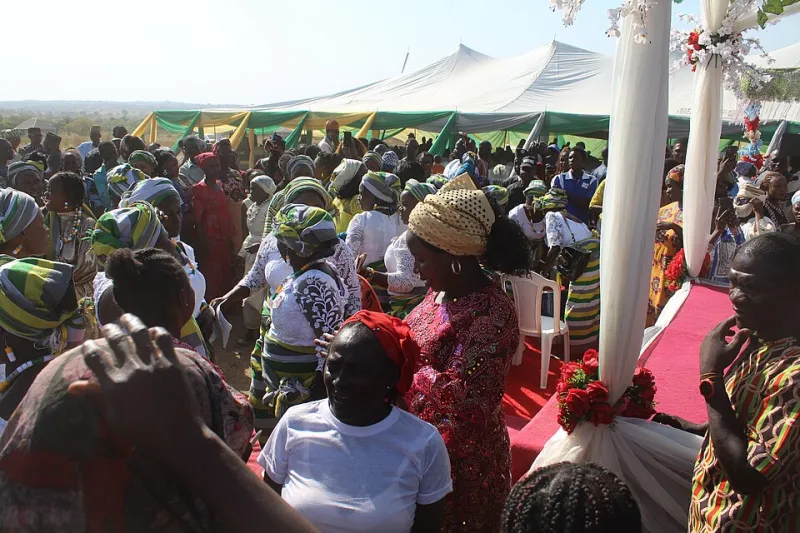
Photo: UnexDeCreator, CC BY-SA 4.0, via Wikimedia Commons
Every summer, a committee of volunteers assembles a heritage festival. They book a stage, print a program, solicit food vendors, and negotiate a permit with the town. They do all of this with care and with genuine love for the culture being celebrated. Then they send an email to the performers explaining that the budget is limited this year, that the event will offer tremendous visibility, and that the committee hopes the artists understand.
The artists usually do understand. That is precisely the problem.
The arithmetic of a Saturday festival
Consider what a public heritage event actually costs to produce and who absorbs the cost. The tent company invoices the committee. The sound engineer invoices the committee. The printer invoices the committee. The graphic designer often does not. The storyteller, the folkloric dance troupe, the oud player, the quilt demonstrator, and the elder who agrees to lead a language workshop frequently do not invoice anyone.
If a festival organizer were to itemize the donated cultural labor at modest professional rates, the figure would often exceed the cash budget of the event. That labor is invisible because it never appears on a balance sheet. It is recorded instead in the slightly apologetic thank-yous at the closing ceremony.
This is not an accusation of bad faith. Many heritage events are run by the same communities whose traditions they present, on shoestring budgets, by people who are themselves unpaid. The problem is structural, and it has a name: the exposure economy.
Exposure is a hidden subsidy
Exposure arguments rest on an assumption that the artist's compensation is future work. Sometimes that is true. More often, it is a transfer of risk. The organizer keeps the uncertainty of whether the event will draw a crowd; the artist absorbs it, in the form of a Saturday spent performing for free.
There is a second assumption embedded in the phrase: that community cultural practice is not quite professional work. It is tradition, the thinking goes, offered freely out of love. This framing does real damage. It makes the seamstress who teaches embroidery, the drummer who trains teenagers, and the cook who demonstrates a regional dish legible as enthusiastic hobbyists rather than as practitioners with skill, expenses, and sometimes a business.
A telling detail: organizations rarely ask the tent company to accept visibility in lieu of payment. They ask the artists because artists are the ones with the least leverage and the strongest sense of obligation to the community being celebrated.
Fair pay is a preservation question
It is tempting to file this under labor policy and move on. It belongs, more properly, under preservation.
A tradition continues because someone teaches it to someone else, and teaching takes hours. A craft survives because a practitioner can afford materials, studio time, and the years of practice before competence becomes visible. A language is carried by people who have time to convene learners. When the practitioners in a community must choose between cultural work and paid work, the culture does not pause. It thins.
Organizations that underpay artists are, in effect, drawing down a reserve of goodwill and generational knowledge that they did not accumulate and cannot replenish. The archive of a living tradition is not a folder of recordings. It is a roster of people who are still willing and still able to show up.
What a budget that says what it means looks like
A few practices distinguish events that genuinely support cultural practitioners from events that merely feature them.
Line-item artist fees. Not a pooled honorarium distributed at the committee's discretion, but a published fee schedule, set before invitations go out, with different rates for performance, teaching, and demonstration. If the fee schedule is public, artists can decide whether to participate without a negotiation they may not feel entitled to conduct.
A stated percentage. Organizers who can calculate what share of the total budget goes to the people whose culture is being celebrated learn something quickly. If the number is under ten percent, the event is spending more on presentation than on practice.
Payment terms in writing. Fees paid within thirty days, not at the end of a fiscal quarter after the treasurer returns from vacation. Small organizations can do this; it is a matter of sequencing.
Travel, materials, and childcare. A drummer with two children is not being difficult by asking who covers the gap between load-in and downbeat.
Reciprocity beyond the stage. Free access to the event's documentation, a link to the artist's booking page, and a standing invitation to the planning table next year rather than a thank-you note in December.
The objection worth answering
Organizers will reasonably ask: what if the money is not there? Many heritage events operate on municipal micro-grants and raffle proceeds, and a sudden increase in artist fees would mean fewer acts or a shorter program.
That is a real constraint, and it deserves a real response rather than an accusation. The honest answer is triage. A smaller event that pays six practitioners fairly is a stronger cultural investment than a larger one that pays none of them. A committee can cut the tent size, move the festival indoors, drop the printed program, and redirect the savings. And the constraint is an argument for advocacy, not resignation: funders respond to line items, and an event that has never budgeted artist fees has never had the opportunity to have that line funded.
There is also an uncomfortable conversation to have within communities about who is asked to represent culture for free. The elders, the recent immigrants, the women's guilds, and the young people learning their family's language are disproportionately the ones asked to donate their expertise. The pattern tends to follow existing distributions of power.
What the ledger records
A budget is a moral document. It states, in numbers, what an organization believes is essential. Every event that pays the sound engineer and hopes the poet will understand has already answered the question of who counts as a professional and whose contribution can be assumed.
The alternative is not complicated. Set the fee. Publish the schedule. Pay on time. Ask the practitioners what they need before the program is printed rather than after the invoices arrive.
Heritage is not preserved by applause. It is preserved by people who can afford to keep doing the work.