Packets of Continuity: Seven Lending Gardens Where Immigrant Growers Bank Their Culinary Memory
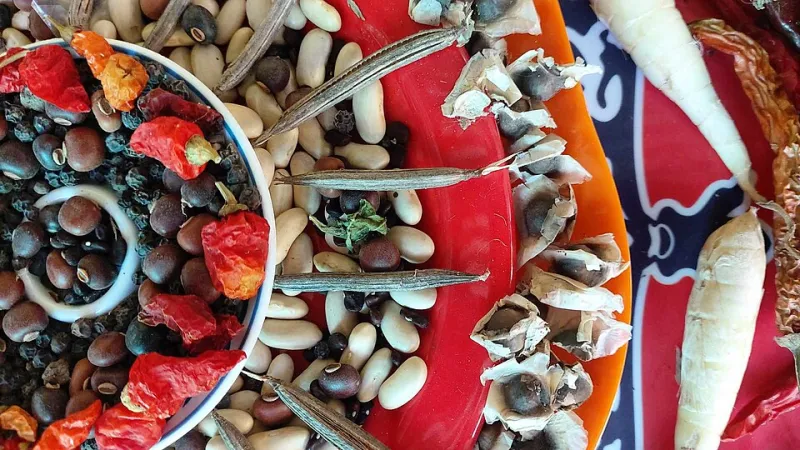
Photo: Elmer Centeno Guevarra, CC BY-SA 4.0, via Wikimedia Commons
A seed library can look unremarkable: a card catalog, a few glass jars, a handwritten sign asking borrowers to return what they grow. Yet inside those packets is a form of cultural memory that does not fit neatly on a museum shelf. For immigrant and Indigenous growers, seeds carry recipes, homeland landscapes, and the practical knowledge of when to plant, how to save, and whom to feed. Across the United States, community seed collections are becoming living archives of foodways. The seven examples below are not a ranked list. They are a map of how local lending gardens are answering a difficult question: who gets to define a heritage crop, and on what terms?
Minneapolis: A Borrow-and-Return Shelf for Somali and Hmong Growers
In the Cedar-Riverside neighborhood, a community garden group maintains a small seed shelf organized by cooking use rather than botanical family. Borrowers take packets of cilantro, chili, and Asian greens and are asked to return a portion of saved seed after harvest. The policy is simple, but it has required patient translation work. Workshops are offered in Somali, Hmong, and English, and organizers stress that seed saving is not a test of cultural purity. A crop that crosses borders and kitchens is still a heritage crop if the community says so.
Fresno: The Pepper Packet With a Family Tree
In California's Central Valley, a seed library attached to a neighborhood food hub lends pepper varieties that arrive with handwritten notes about family origins. Some notes are detailed; others simply say 'from my mother's garden.' Volunteers record what they can, but they resist turning every packet into a formal provenance file. The library's borrowing policy allows first-time growers to take seed without a demonstrated family connection, provided they attend one saving workshop. The result is a collection that grows through use rather than gatekeeping.
Tucson: Desert Beans and the Politics of 'Heritage'
A desert growers' collective in Tucson uses its seed library to circulate tepary beans and other drought-adapted varieties. The group has found that the word heritage can be both a bridge and a barrier. Grant applications often reward stories of untouched tradition, while actual growers adapt seed to heat, water scarcity, and changing neighborhoods. The collective's workshops therefore emphasize selection and resilience as cultural practices, not compromises. Borrowers return seed with notes about local conditions, creating a record that is ecological and social at once.
Queens: A Library Card for Callaloo and Bitter Melon
In Queens, a multilingual seed collection operates out of a community center serving Caribbean, South Asian, and West African families. The borrowing system resembles a public library: cards, due dates, and reminder texts. But the collection policy also recognizes that some seed is meant for sharing rather than returning. Organizers keep a separate 'give-away' shelf for varieties that are abundant, and a 'steward' shelf for packets that require careful saving. This two-tier approach acknowledges different cultural norms around obligation and generosity.
Chicago: Workshops Where Seed Saving Is a Civic Skill
A neighborhood garden network in Chicago treats seed saving as a civic skill rather than a hobby. Its library hosts winter workshops on fermentation, drying, and record-keeping, and it pays community growers to lead sessions in Spanish and Polish. The collection includes tomato and bean varieties associated with specific immigrant communities, but the programming avoids presenting them as curiosities. Instead, the workshops ask what it takes to keep a foodway alive in a city where land, water, and time are unevenly distributed.
Rural Iowa: The Church Basement Collection
In a small Iowa town, a church basement holds a seed collection begun by Latina families who work in local food processing. The library is modest: a few shelves, a notebook, and a volunteer who drives packets to nearby towns. Its borrowing rules are deliberately flexible because many growers cannot return seed in a predictable season. The collection's strength is its social function. It gives families a reason to gather in winter, trade growing advice, and keep recipes circulating when few other local institutions reflect their food traditions.
Honolulu: Indigenous Varieties and the Limits of Borrowing
A Native Hawaiian growers' group in Honolulu uses a seed library to care for varieties tied to specific place-based practices. Here, the borrowing policy is more restrictive, and for good reason. Some seed is not meant for open circulation; it carries responsibilities to land, lineage, and community consent. The group distinguishes between educational packets and steward-only varieties, and it asks borrowers to complete a short orientation. This is a reminder that a seed library is not automatically democratic just because it lends. Sovereignty can require limits.
What the Packets Teach
These seven collections do not share a single model, and that is their strength. Some prioritize open borrowing; others emphasize stewardship and consent. Some see heritage as a family inheritance; others treat it as a living practice shaped by climate and migration. What they share is a refusal to let culture become decorative. A seed library is a small infrastructure of memory, but it is also a working argument about who belongs in a local food system. For Thiqar Arts & Heritage, that argument is worth tending as carefully as any heirloom row.