When the Lights Go Dark: Saving the Vanishing Art of the American Neon Sign
The Last of the Tube-Benders
In a workshop outside Albuquerque, a retired sign craftsman in his late seventies is teaching a class of five. Over a ribbon flame, they heat glass tubes, bend them against full-scale paper patterns, and pump them with neon or argon. The average age of working neon benders in America keeps climbing; the average age of his students keeps dropping. Both facts explain why this workshop exists.
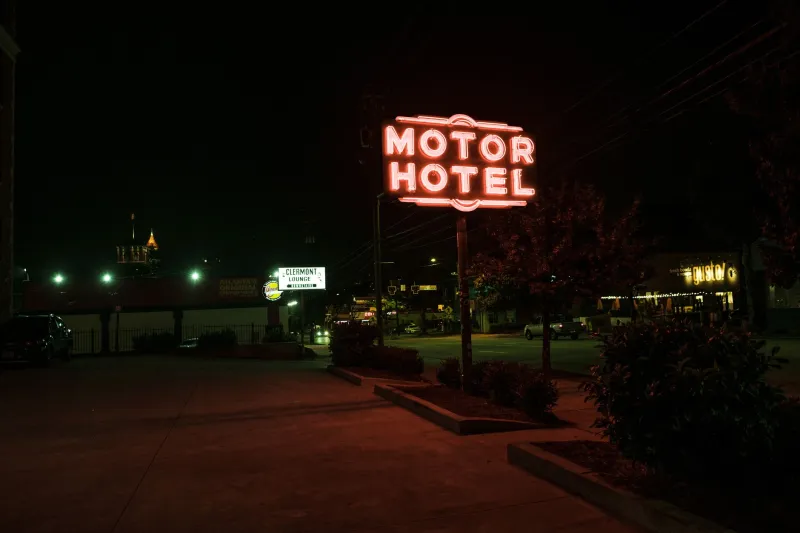
Neon signage reached its American peak between the 1930s and 1960s, when motels, theaters, diners, and bowling alleys competed for attention through increasingly inventive glass-and-gas sculpture. Today, LED technology, rising rents, and generational turnover have made the original signs endangered objects — and the skills to make or repair them endangered knowledge.
The Collectors in the Boneyards
Behind several fabrication shops in the West lie what enthusiasts call neon boneyards: open lots stacked with decommissioned signs in various stages of decay. Collectors walk these rows the way others walk cemetery grounds, reading names of businesses long closed. A cowboy sign from a Route 66 motor court. A martini glass from a downtown cocktail lounge. A rotating star from a hardware store that served three generations.
Some collectors restore signs for private display. Others donate them to the growing number of American museums dedicated to signage and commercial art, where the pieces are rewired, lit, and interpreted as folk art of the marketplace. Several city governments have also entered the field, adopting ordinances that allow historic business signs to remain illuminated even when the underlying business changes hands.
What a Town Loses When the Sign Comes Down
Preservationists argue that neon signs function as civic landmarks in a way that no replacement panel can. They mark gathering places, anchor memory, and give a street a recognizable identity. When a beloved sign is replaced by a backlit plastic box, residents frequently report that the block feels generic — that some portion of local character has been quietly deleted.
There is also an economic argument. Commercial corridors that retain their vintage signage have, in several documented cases, become destinations. Visitors photograph the signs, patronize the businesses beneath them, and spend money in the neighborhood. The sign, in other words, is not nostalgia. It is infrastructure.
Passing the Torch — and the Torch Itself
The craft's survival depends on transmission. Apprenticeship programs, community college courses, and informal shop arrangements are emerging in a handful of cities, often funded by sign museums or small-business preservation grants. The learning curve is steep: glass work demands patience, precision, and a tolerance for minor burns.
Thiqar Arts & Heritage considers this a community initiative in the fullest sense — a case where artistry, commerce, and local identity depend on ordinary people deciding that something luminous is worth keeping lit. The benders are aging. The signs are fragile. But in Albuquerque and a dozen workshops like it, the flame is still being passed, one bend at a time.