The Seams That Remember: Five Community Quilts Turning Local History Into Cloth
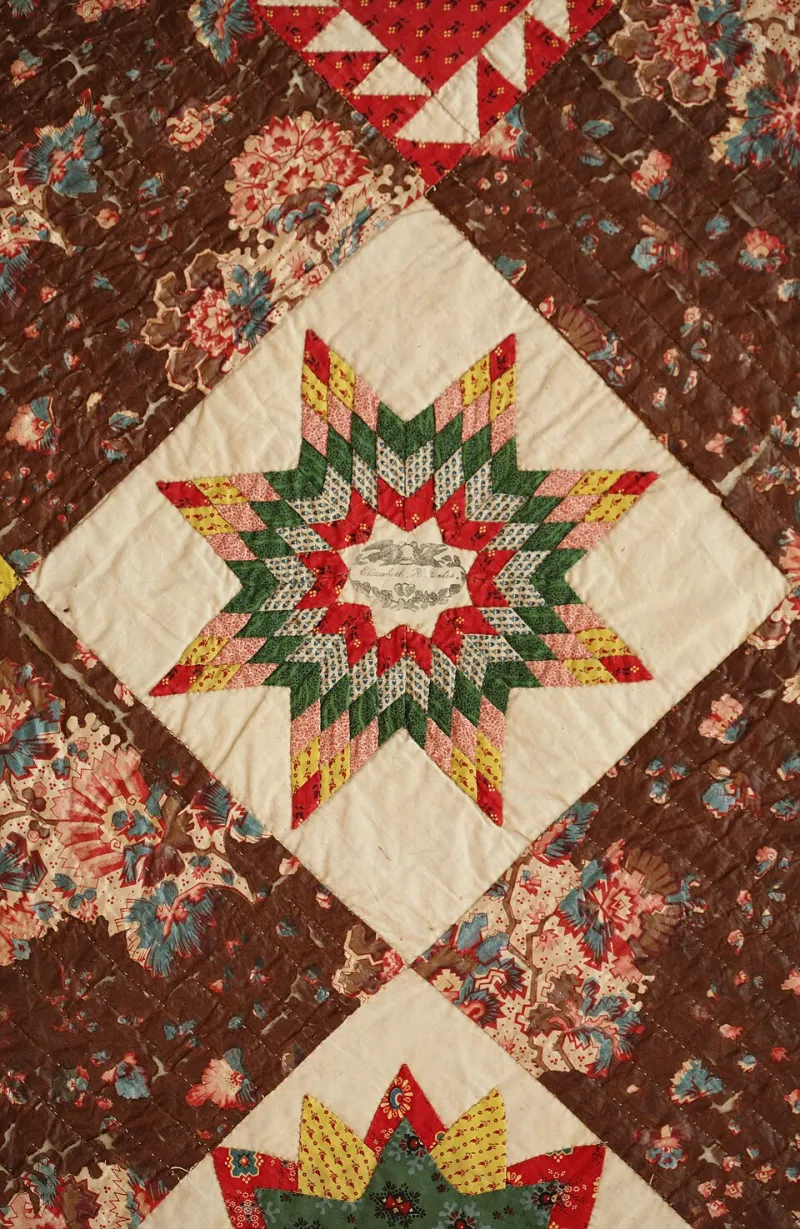
Photo: Unknown, Public domain, via Wikimedia Commons
A quilt can hold a town's history in its seams. Unlike a monument, it is soft, portable, and made to be handled. Unlike a book, it can be read at a glance and then studied closely. Across the United States, community quilt projects are using that double quality to record local history in ways that feel both intimate and public. The best of them are not simply craft circles. They are research operations, oral-history gatherings, design collaborations, and small-scale conservation labs.
The process usually begins with a question: whose stories are missing from the official record? From there, organizers put out a call for participants, collect family photographs and written memories, host sewing sessions, and negotiate a design that can hold many voices without flattening them. The finished textile is often displayed in a library, city hall, museum, or community center, sometimes with an audio component or a companion booklet. The quilt becomes a public archive that people can touch with their eyes, even when they cannot touch the fabric itself.
1. The Harvest Line Quilt — Fresno, California
In Fresno, California, a neighborhood arts center convened Hmong and Mexican farmworker families to create a quilt about agricultural labor. Participants contributed fabric from work shirts, seed sacks, worn aprons, and children's clothing. The design does not attempt a single panorama. Instead, it moves across rows of fields, packing sheds, and kitchen tables, with embroidered names and dates stitched along the borders.
Organizers recorded oral histories with elders and younger workers, then used short excerpts in a companion audio guide. The quilt was displayed at a county library, where visitors could listen to the recordings while viewing the textile. The project treats labor as heritage, not merely employment history. It also makes visible the seasonal rhythms and family networks that sustain agricultural communities but rarely appear in local museums.
2. The Northside Memory Quilt — Milwaukee, Wisconsin
Milwaukee's Northside Memory Quilt began as a response to displacement. In the 1960s and 1970s, highway construction and urban renewal cut through neighborhoods, destroying homes and businesses. Many families scattered. Decades later, a group of former residents and current neighbors began meeting in a public library to reconstruct the area block by block.
Participants sewed porch steps, corner stores, church windows, and street trees. The quilt does not pretend to be an accurate map. It is a memorial with a street grid, a way of saying that the neighborhood existed and that its social geography mattered. Sewing circles became storytelling sessions. Older residents corrected younger volunteers about which store sat on which corner, and those corrections were built into the design. The finished quilt now travels between a community center and the library, accompanied by a binder of photographs and family notes.
3. The Tidewater Freedom Quilt — Hampton Roads, Virginia
In Hampton Roads, Virginia, a local historical society worked with African American families connected to the watermen and dockworkers of the Chesapeake Bay. The Tidewater Freedom Quilt uses indigo, canvas, denim, and worn work cloth to evoke the region's maritime labor. Its log-cabin pattern echoes pilings, docks, and the stacked geometry of warehouses.
Researchers conducted family interviews and scanned photographs of oyster shuckers, crabbers, and shipyard crews. The quilt includes embroidered initials and dates, but it avoids turning individuals into decorative symbols. Instead, the blocks are arranged to suggest both a shoreline and a family tree. The project was displayed at a regional history museum with a reading area where visitors could review transcripts. For the organizers, the goal was not only to honor labor but to show how Black maritime communities shaped the region's economy and culture.
4. The River Remembers — Cedar Rapids, Iowa
After the 2008 flood and the 2020 derecho, residents of Cedar Rapids, Iowa, began meeting in church basements and a public library to make a quilt about loss and recovery. The River Remembers combines images of lost trees, flooded porches, damaged storefronts, and rebuilt gardens. Some blocks include handwritten addresses transferred to fabric. Others use scraps from curtains, work uniforms, and children's clothes.
The project deliberately avoids a triumphant narrative. Recovery is not depicted as a straight line. Some blocks are frayed at the edges. Some colors clash. The quilt was displayed at city hall, where it functioned as both memorial and civic prompt. Visitors were invited to add written memories to a companion notebook, which was later digitized. The organizers describe the quilt as a way to keep disaster visible after the news cameras leave, and to remind public officials that recovery is a long social process.
5. The Welcome Stitch — Clarkston, Georgia
In Clarkston, Georgia, a refugee resettlement community, women from several countries formed a sewing group that eventually produced The Welcome Stitch. Participants created blocks representing home countries, migration routes, and current neighborhoods. The quilt includes textiles from Somalia, Syria, Bhutan, and Central America, alongside fabric purchased at local thrift stores.
The project paired sewing instruction with English-language conversation and basic civic orientation. The quilt was displayed at city hall and the public library, with labels written by the participants themselves. Organizers were careful not to present the women as anonymous representatives of a single refugee story. Each block carries a name and a short statement. The Welcome Stitch treats arrival as part of local history, not a separate story, and it asks viewers to see the town as a place shaped by many journeys.
What Makes a Quilt an Archive
A quilt becomes an archive when it is documented as carefully as it is made. That means recording who contributed which block, collecting oral histories, noting materials, and creating a stable label or catalog record. It also means planning for conservation. Textiles are vulnerable to light, heat, moisture, and handling. Good projects use UV-filtered cases, rotate quilts off display, and train volunteers in basic care.
Display is not the end of the work. The strongest projects create multiple access points: a physical quilt, a digital image, a booklet, an audio guide, or a school curriculum. That redundancy matters because a single textile cannot be everywhere. The quilt is the center, but the archive is the network around it.
Community quilts succeed when they resist the temptation to speak for everyone. They are most honest when they show negotiation, omission, and revision. A seam that was unpicked is still part of the story. A block that was remade tells us something about memory. In that sense, the quilt is not a finished monument. It is a continuing civic conversation, stitched into something a town can see.